Tuesday, March 9, 2021

Demkovich v. St. Andrew (Ministerial Exception)

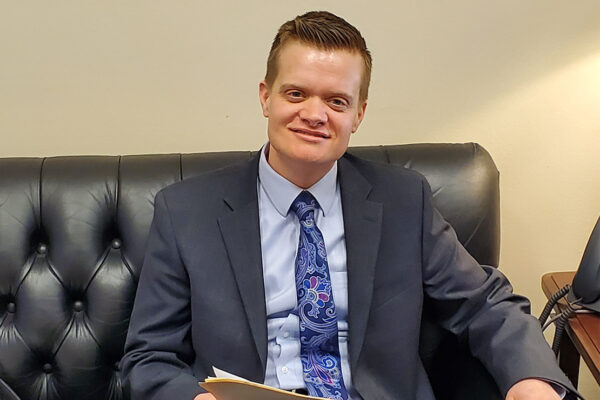
Sandor Demkovich worked as the music and choir director for St. Andrew, a Catholic Parish in Calumet City, Illinois, until he was fired for marrying his husband. Demkovich also expressed that he was discriminated against by Jacek Dada, the head paster, during his time at St. Andrew. Dada allegedly harassed Demkovich about his sexuality and weight since Demkovich is homosexual, diabetic, and has been diagnosed with a metabolic disorder. Shortly after Demkovich’s marriage to husband Frank Hattula, Dada asked him to resign; when he refused, Dada fired Demkovich. Demkovich filed a lawsuit against St. Andrew church and the Archdiocese of Chicago for discrimination which violated Title VII and the Americans with Disabilities Act. The church argued that under “ministerial exception,” the First Amendment protects its rights to hire and fire employees for reasons dictated by faith (Molloy).

The Supreme Court clarifies the purpose for “ministerial exception” in Hosanna-Tabor Evangelical Lutheran Church and School v. Equal Employment Opportunity Commission (EEOC): “The members of a religious group put their faith in the hands of their ministers. Requiring a church to accept or retain an unwanted minister, or punishing a church for failing to do so, intrudes upon more than a mere employment decision” (Hosanna-Tabor Evangelical Lutheran Church v. EEOC). The Court decided that the ministerial exception applied to the plaintiff, a teacher at the elementary school who was fired after being diagnosed with disability, establishing her as a “minister” and validating the rights of Hosanna-Tabor to fire her. This decision was used as precedent in the case Our Lady of Guadalupe School v. Morrissey-Berru when the Supreme Court interprets considers elementary school teachers, Morrissey-Berru and Biel, to be “ministers” despite not being ordained. The Court lists their “significant religious responsibilities” and concludes that their roles qualify as ministers (Our Lady of Guadalupe School v. Morrissey-Berru). Justice Alito added that it would be restrictive “to adopt a rigid formula for deciding when an employee qualifies as a minister” (Our Lady of Guadalupe School v. Morrissey-Berru). 

After Demkovich’s claims were dismissed by the US District Court, the US Court of Appeals for the Seventh Circuit acknowledged the religious institution’s right to apply ministerial exception, they must also “maintain a workplace free from harassment” (Esposito). The case is in session, and it has not been indicated when a verdict will be made. 

With Supreme Court decisions of Hosanna-Tabor Evangelical Lutheran Church and School v. EEOC and Our Lady of Guadalupe School v. Morrissey-Berru in mind, I believe, in the eyes of the Supreme Court, Demkovich qualifies as a “minister of the church” despite acting as the music and choir director. Therefore, I believe that the church has the right, under the First Amendment, to hire and fire employees that further their mission to practice the beliefs being preached in the parish. I do not agree with the umbrella protection provided by the ministerial exception and believe it requires more nuance to serve its true purpose—to allow a religious institution to have autonomy over who furthers their mission. Many see the ministerial exception as a shield for religious institutions to dodge complaints of discrimination. I believe this introduces the threat of the slippery slope—the existence of the ministerial exception expects religious institutions not to exploit its protection. The influence of Supreme Court decision in this case will reach far beyond church employees. The extension of the definition of “minister” could broaden to students at a parochial school, doctors of a religious hospital, or employees of another religiously affiliated organization. If a parochial school student comes out as non-heterosexual, can the school expel the student? (Needham) When does an employee truly become a “minister” of the religious institution? Additionally, in this case, the church cannot extend the ministerial exception to excuse Dada’s harassment against Demkovich. As stated by Justice Alito in the decision of Our Lady of Guadalupe School v. Morrissey-Berru, “This does not mean that religious institutions enjoy a general immunity from secular laws, but it does protect their autonomy with respect to internal management decisions that are essential to the institution’s central mission” (Our Lady of Guadalupe School v. Morrissey-Berru). Furthermore, the ministerial exception cannot create complete religious autonomy which ignores the law of the land. In a case similar to Demkovich, Koenke v. St. Joesph’s University, Noel Koenke filed a Title IX lawsuit against her employer after being discriminated against for her sexuality (Koenke v. Saint Joseph's University). Koenke’s attorney explained, “The university could have said, ‘We are not going to hire you because you’re gay.’ The university could have also said, ‘You’re fired because you’re gay.’ What you don’t get to do is hold the position open to a gay person, give it to them and then subject them on a daily basis to harassment” (Molloy, Lesbian Employee Sues St. Joseph’s University Over Discrimination and Harassment). As argued by Demkovich’s attorney, it’s clear the instances of harassment “have nothing to do with religious justification” and therefore cannot be defended by ministerial exception (Klein). Exploitation of ministerial exception opens the door for religious institutions to discriminate against under-represented people. 

Bibliography
Esposito, Stefano. Court reinstates sexual harassment claim of former Catholic music director fired after same-sex wedding. 1 September 2020. <https://chicago.suntimes.com/news/2020/9/1/21410353/catholic-music-director-fired-same-sex-wedding-sandor-demkovich-calumet-city>.
Hosanna-Tabor Evangelical Lutheran Church v. EEOC. No. 565. Supreme Court of the United States . 2012.
Klein, Lisa. Catholic Church Argues for Exception to Worker Rights at Seventh Circuit. 9 February 2021. <https://www.courthousenews.com/catholic-church-argues-for-exception-to-worker-rights-at-seventh-circuit/>.
Koenke v. Saint Joseph's University. No. 2:19-cv-04731. Pennsylvania Eastern District Court. 8 January 2021.
Molloy, Kevin. Appeals Court Reinstates Fired LGBTQ Church Worker’s Discrimination Lawsuit. 6 October 2020.
—. Lesbian Employee Sues St. Joseph’s University Over Discrimination and Harassment. 11 February 2020. <https://www.newwaysministry.org/2020/02/11/lesbian-employee-sues-st-josephs-university-over-discrimination-and-harassment/>.
Needham, Lisa. The Supreme Court Fails LGBTQ and Disabled Students in Ruling. 7 July 2020. <https://rewirenewsgroup.com/article/2020/07/07/the-supreme-court-fails-lgbtq-and-disabled-students-in-ruling/>.
Our Lady of Guadalupe School v. Morrissey-Berru. No. 591. Supreme Court of the United States. 2020.
Shine, Robert. Experts Warn of Consequences for LGBTQ Church Workers After Supreme Court Ruling. 11 July 2020. <https://www.newwaysministry.org/2020/07/11/experts-warn-of-consequences-for-lgbtq-church-workers-after-supreme-court-ruling/>.

MuslimPro & the Suveillance of Muslim Americans

MuslimPro is an app that provides reminders for its 98 million international users for prayer times and also helps orient them towards Mecca with an in app compass, during Ramadan it gives recommendations to halal restaurants in the users area, informs them of when they can break their fast and more. The service that MuslimPro provides its users is invaluable for many practicing Muslims in their ability to observe their faith no matter where they are. The parent company of MuslimPro the Singapore based Bits Media has recently come under fire about their data collection and sales practices, notably for the sale of data to a company called X Mode who lists the US Military as one of their clients. Another one of their apps that is facing the same criticisims is popular Muslim dating app, Muslim Mingle.

For many of the customers this came not only as an unpleasant reminder of the nature of using free online platforms but also was viewed as yet another example of the United States government targeting and surveilling practicing Muslims both within and outside of the United States. Imam Omar Suleiman the founder of Yaqeen Institute for Islamic Research and a prominent Muslim Scholar stated “This is part of a wrong pattern of crackdowns and all sorts of violations of our civil liberties that have preyed on our most basic functions as Muslims.”


A few weeks back around a dozen members of Congress sent a letter to the Secretary of Defence and the Director of National Intelligence demanding to know the process used by the military in its purchasing of location data and also to ascertain whether or not any Americans were surveilled. The Democrat Senator of Oregon Ron Wyden tweeted, “Every single American has the right to practice their religion without being spied on...”


While the surveillance of American citizens by the government is already a present issue for many this particular case raises several questions regarding the religious freedom of Muslim Americans. The freedom to practice one's religion without undue interference by the government is a central part of the First Amendment and the Establishment Clause. For many who use this app there are several central concerns raised by their possible surveillance. For one, prayer and faith are considered by many a private affair, is it fair to them to be tracked for their observance of praying five times a day? In addition is it ethical for a company to be selling data concerning religion? Is it the right of the government to know your location each and every time an individual prays or follows their religious beliefs? Or does it place an undue burden on Muslim Americans knowing that the government is tracking them for no other reason then their faith? This could have the unintended consequence of making Muslim Americans feel intimidated and dissuaded from practicing a central part, for observant Muslims, of their faith. 


While the purchasing of location data by the US Military poses some general ethical and legal quandaries for all, what sets this situation apart is the direct targeting of one particular religion. Islam is the second largest religion in the world but only represents about 1% of Americans or just under 3.5 million as of 2017. However, the Muslim population of the United States is one of the most targeted both by the government and the general population, Gallup Polls have shown that Islam is the least liked religion by the general United States population. Over the past 20 or so years not only has there been a rise in Islamophobia but the United States government has invested billions of dollars in the surveillance of the Muslim American population largely due to tensions following 9/11 and the subsequent conflicts in the Middle East, however little to nothing has resulted from that surveillence yet the government continues to place undue pressure on Americas Muslim population. 


From my perspective, I wholeheartedly disagree with the purchasing of location data from MuslimPro. By targeting a minority religious population and surveilling the frequency with which they choose to pray and where I think the government not only entagles itself with the freedom with which people are able to practice their faith but also places an undue burden of stress and fear upon Muslim Americans. People should not have to fear government surveillance when they participate in their faith. Nor should a community that has been so targeted have their location tracked as they go about their daily business for no other reason than their religious convictions.


Arlene's Flowers v. State of Washington

Curt Freed and Robert Ingersoll have been long-time customers of Barronelle Stutzman's flower shop, Arlene's Flowers, in Richland, Washington. Ingersoll and Freed were engaged, and they were planning on having a same-sex wedding that fall. On March 1, Ingersoll went to the flower shop hoping to buy some flower arrangements for his wedding in September of 2013. When Baronelle found out, however, that a gay couple was planning on using her flower arrangements for their wedding, she denied to sell to them due to her religious beliefs. She politely said to them that she could not participate in the making of this ceremony, but referred him to three different florists that she knew did not have the same beliefs as her. At the end of the conversation the two even hugged before Ingersoll left. Once Ingersoll's partner, Freed, found out that the couple had been denied service due to them having a same-sex wedding, he took to Facebook to slander Miss Stutzman's flower shop. This resulted in Stutzman being berated on the media: she received hate mail, phone calls, and even death threats as a result of her actions.

The Washington state attorney general saw what had happened through the media and filed a lawsuit against Barronelle Stutzman without being prompted by Ingersoll or Freed. The attorney general claimed that Stutzman violated the state public accommodations law by refusing to participate in a same-sex ceremony. The Washington Law Against Discrimination prohibits discrimination against people of different sexual orientations and it specifically dictates that businesses may not refuse service to people due to their sexual orientation. In addition to the attorney general, the ACLU also sued Stutzman on behalf of Freed and Ingersoll. These separate lawsuits combined into one larger lawsuit that was filed and taken to Benton County Superior Court. The lawsuit was seeking damages for violating the same-sex couple's rights and the lawsuit stated that Stutzman could no longer discriminate against customers in the future. The Superior Court ruled in favor of Freed and Ingersoll. 

After the ruling against Stutzman, the Alliance Defending Freedom "ADF" group petitioned the Washington state Supreme Court to take the case. The ADF stands in support of Stutzman, as they believe religion should be enough of a reason to deny one service in public accommodations.

In March 2016, the Washington state Supreme Court took on the case and in February of 2017 they affirmed the decision made by the Superior Court. The Washington state Supreme Court stated that the government is allowed to force Stutzman to participate in events she does not religiously or morally agree with.

In July 2017, the ADF appealed the ruling on Stutzman's behalf and they petitioned the U.S. Supreme Court to take on the case. In June 2018, the U.S. Supreme Court sent the case back down to the Washington state Supreme Court, vacated the court's decision, and told the court to reconsider the lawsuit after the Supreme Court's decision in the Masterpiece Cakeshop v. Colorado Civil Rights Commission was made.

On June 6, 2019, the Washington state Supreme Court took on the case again and ruled against her for the second time. The court reasoned that a business cannot plead religious exemption from a state law.

Stutzman and the ADF attorneys decided to file a petition on September 11, 2019 to the U.S. Supreme Court asking them to review this case again. The Supreme Court has yet to review the case for a second time.

The ruling of this case is particularly important because it would allow the U.S. Supreme Court to reaffirm the decision made in Masterpiece Cakeshop. It would show that the First Amendment protects the freedom of all Americans and that those with conflicting religious views on marriage should be allowed to express and voice their opinions, as Strutzman does.

I believe that the Washington state Supreme Court continues to make the wrong decision, and that the U.S. Supreme Court should overturn the decision made in the lower courts so as to vote in favor of Barronelle Strutzman. This case is extremely similar to Masterpiece Cakeshop v. Colorado Civil Rights Commission, where the Supreme Court ruled in favor of the cakeshop. I believe that if the cakeshop was allowed to refuse to make a gay couple a cake for their wedding, then Strutzman should be allowed to refuse to provide flower arrangements for a same-sex wedding. In both cases, the owners of the businesses are being asked to provide goods for someone that is participating in an act against their beliefs. Even more specifically, the couples are participating in weddings, which are often valuable religious symbols to those that are Christian and believe in God (Strutzman is one of those religious Christian people). Strutzman holds her religion sacred to her and her relationship with Christ is being challenged. It is unconstitutional to violate Strutzman's right to exercise her religion freely. Her flower arrangements are an artistic expression of her religious beliefs, thus if the government forced her to make arrangement for a same-sex couple, it would violate her First Amendment rights. 

Monday, March 8, 2021

Waln v. Dysart School District

Larissa Waln’s graduation cap with beading and feather.
Source: Native American Rights Fund

In May of 2019, LaRissa Waln, a member of the Sisseton Wahpeton Oyate Native American tribe, was preparing to graduate from Valley Vista High School in Arizona. She decided to attach “a sacred and religious eagle plume” as well as traditional beads to her graduation cap. She asked several school employees for permission to wear the beads and plume on her cap, and her requests were denied. Officials said she was allowed to wear the adornments anywhere else on her body, but Waln’s father said “the feather could only be worn on top of her graduation cap”. Upon walking into the stadium where the graduation ceremony was being held, school officials would not permit Waln to enter unless she removed the religious items she affixed to the cap. She refused, and did not attend her graduation ceremonies. She then sued the school district, citing the First Amendment’s rights to free exercise of her religion.

The school district specifically argued “This commencement dress code is neutral and applied generally to all graduating students. […] the District will permit a student to wear an eagle feather in his or her hair, as a necklace or as other jewelry. This will allow her to participate in the exercise of her religious symbolic speech at the graduation.” Graduation ceremonies for the District were held in a leased, private stadium, and attendance is not required for students to receive a diploma. The school further said that the rule against any adornments on caps was “a reasonable restriction on student speech... to preserve the sanctity and formality of the commencement ceremony.”

When Waln’s father requested to see the District’s policy on graduation caps and gowns, they “could not” furnish one. Further, Waln alleged that a student at another high school in the same district was allowed to wear a different, secular symbol on their cap: a breast cancer-awareness sticker.

Arizona state law prohibits burdens of the free exercise of religion if a policy is “the least restrictive means of furthering [a] compelling governmental interest.” On Waln’s behalf, the Arizona American Civil Liberties Union (ACLU) argued, “There is simply no compelling governmental interest in prohibiting her from exercising her Native American faith in this context [… and] denying Ms. Waln’s proposed religious accommodation would not be the least restrictive means of furthering a compelling governmental interest.”

On February 28, the United States District Court for the District of Arizona ruled in favor of the District. In regards to Waln’s claims of free exercise, the District Court cited the 1992 Supreme Court case Church of Lukumi Babalu Aye, Inc. v. City of Hialeah, which unanimously ruled that a city ordinance prohibiting animal sacrifice violated the Free Exercise clause of the First Amendment. As the law in question directly targeted the church, the majority opinion of Hialeah quoted, “a law that is neutral and of general applicability need not be justified by a compelling governmental interest, even if the law has the incidental effect of burdening a particular religious practice”. Also, citing a dissent of Tinker v. Des Moines Independent Community School District — a case that decided students’ wearing black armbands to protest the Vietnam War was protected speech — the Court said no part of the Constitution “compels the teachers, parents, and elected school officials to surrender control of the American public school system to public school students.”

The District Court summarized, stating that “The graduation dress code itself was content-neutral and, as written, generally applicable.”

I disagree with the District Court, and agree with Waln and the Arizona ACLU. While the burden imposed upon Waln by the District may have appeared “incidental,” the Arizona District Court, ironically enough, cites a dissent from Tinker, one of the most important Supreme Court cases for students’ free speech: allowing them to peacefully, passively protest the Vietnam war through black armbands. Waln’s religious expression is the same, in that it is passive and a free expression of a specific student’s religious practices. One could argue that graduation ceremonies are just as vital to a student’s education as mandated school assemblies or after school, during both of which times free exercise is protected just as much as during the school day. In my opinion, the District’s desire for “unity and sanctity” reek of the logic in Minersville School District v. Gobitis, in which “national unity” was (erroneously) seen as a compelling enough reason to compel students’ repeating of the Pledge. Additionally, the District’s guidance that wearing the religious emblems elsewhere on her person could “allow her to… exercise” her religion is confounding: who is a school district to state what can and cannot fulfill an individual’s religious beliefs? Allowing students to participate in individual exercise of religion, in accordance with their beliefs, is vital, and, unfortunately, this facially neutral law served against the interests of Waln’s right to free exercise.

Note: this article was corrected from its original version to update material facts of Hialeah.

Tuesday, March 2, 2021

Minton v. Dignity Health

    For many transgender people, surgical procedures are necessary to affirm their gender expression.  For Evan Minton, he was denied this solely on the fact of his gender identity.  In August of 2016, Evan Minton was receiving medical care and undergoing a series of gender-affirming surgeries.  Minton is a transgender man and had been undergoing multiple operations to affirm his gender identity and expression. Minton made an appointment with Mercy San Juan Medical Center to receive a hysterectomy (removal of the uterus).  As a transgender man, this medical procedure was incredibly important to Minton’s gender expression and identity.  Two days before his surgery, he had a conversation with a nurse to go over the details of his operation and in the conversation, he mentioned that he was transgender.  The next day, he received a phone call stating that his surgery was canceled.  Hysterectomies were a normal operation done at Mercy San Juan Medical Center, but Evan Minton, he was denied medical care.  Mercy San Juan Medical Center is a hospital in San Juan, California, and is under the Dignity Health chain.  Dignity Health allowed Mercy San Juan Medical Center, a Catholic hospital, to decline the hysterectomy for Minton because he is transgender.  Dignity Health allows hysterectomies for people who are not transgender, but allowing this procedure to be done on a transgender man violates the religious ideals of the Catholic Church’s Ethical and Religious Directives.  Dignity Health is the fifth largest health organization in the U.S. and makes billions of dollars in revenue every year.  Dignity Health explained that it was within their first amendment right to not operate on Minton because it goes against the religious beliefs of the hospital.  While Evan Minton was able to have the surgery, it still did not negate the fact that he was denied medical care based on his gender identity.  

    The American Civil Liberties Union (ACLU) and Covington & Burling LLP teamed up and filed a lawsuit against Dignity Health on Minton’s behalf to defend the idea that Evan Minton should not be denied medical care because he is transgender.  In the lawsuit, Minton claimed that the actions of Dignity Health violated the California Unruh Civil Rights Act which prohibits discrimination based on sex, gender, gender identity, and gender expression in all businesses. In their motion, Dignity Health argued that sterilization operations are not provided at their Catholic hospitals because it went against their ideals detailed in the Catholic Church’s Ethical and Religious Directives.  For Dignity Health, they argued that this code of conduct at their Catholic hospitals was supported by the first amendment rights.


In this case, we are dealing with the issue of whether or not a company has a right to refuse services if their religious beliefs don’t align with the client’s identity.  The case also tackles the issue of whether the courts can force someone to provide a service even if it is against their religion.  In my opinion, it is within Mercy San Juan Medical Center’s 1st amendment rights to withhold medical care because they are a private institution and this procedure does violate their religious beliefs, but should they be allowed to do so?  The actions of Mercy San Juan Medical Center and Dignity Health were a blatant display of transphobia because Minton was denied care solely because of his gender identity and expression.  While it is within their first amendment rights to not treat Evan Minton, I think this raises an important question of whether or not hospitals (public or private) should be able to deny healthcare to anyone for any personal reason.  For health care workers, treating patients to the best of their ability is their main purpose and goal.  Hospitals are meant to treat people regardless of their identities or whether their workers agree with the identities of their patients.  A hospital should not be able to reject someone’s medical care request based on their identity which is the main goal of the California Unruh Civil Rights Act.  Sure, Minton was able to receive his hysterectomy at a different hospital, but what about those who don’t have the means to go somewhere else? The impact of the decision that the court makes will be huge and the effects could be potentially dangerous.  I think this case will create a slippery slope if the courts decide to let Dignity Health allow their Catholic hospitals to deny transgender people healthcare. 
No one deserves to be turned away when they are seeking medical help. Not only would trans people not be able to receive medical care at this hospital even if they need it, but other hospitals could follow suit and allow their personal beliefs to obstruct the main goal of being a healthcare provider.  


Ricks vs. Idaho Board of Contractors

 The case before the courts is one of the free exercise clause and an employment opportunity. George Ricks is a nearly 60-year-old man with four children, hoping to become an "independent contractor." As required by the Idaho Board of Contractors, those applying to be an independent contractor must include their government-issued Social Security number on their application. In 2014, Ricks applied to the Idaho Board of Contractors without having his Social Security number, which is a crime in Idaho. Ricks' religion prohibits him from including his Social Security number "as a condition of obtaining work." Understanding that the Idaho Board of Contractors required the Social Security number, Ricks offered an alternate form of identification, his birth certificate. Ricks was hopeful due to the Board's history of exceptions, yet they refused to accommodate him, and he was denied. According to Becket, “a federal law dictates that the Board of Contractors will receive extra funding if it collects contractors' Social Security numbers.” When the Idaho Board of Contractors refused to allow Ricks to register as an independent contractor, he lost his income, putting his family at risk. The United States Supreme Court is expected to announce a decision in 2021.

This is not the first time a case regarding the free exercise of religion and employment has faced the Supreme Court; cases such as: Employment Division, Department of Human Resources of Oregon v. Smith, and Sherbert v. Verner have also raised similar concerns. The legal team defending Ricks raises the concern that the ruling in Employment Division, Department of Human Resources of Oregon v. Smith should be revisited and overturned in favor of Smith. This decision would change many cases regarding religious exceptions and employment. At the core of Ricks' case, the question before the court is: “does the Idaho Board of Contractors have the right to make registrants choose between their religion and their job and income?” As shown by the history of the Idaho Board of Contractors, exemptions have been made in the past for individuals who may not have Social Security numbers. Yet, they refuse to make an exemption on religious grounds for Ricks. Additionally, it is concerning that by refusing to accept anything other than Ricks' Social Security number, the Idaho Board of Contractors is benefiting financially from the decision while Ricks must choose between his religion or income. 

The free exercise clause states: “Congress shall make no law respecting an establishment of religion, or prohibiting the free exercise thereof..” Citing the book of Revelation, Ricks believes that providing his Social Security number to the government would be “the 'mark of the beast.' ” By forcing Ricks to provide his Social Security number, the Idaho Board of Contractors is prohibiting Ricks' free exercise of his religion. Ricks is not attempting to defraud the Board of Contractors and has offered up alternative forms of identification to do so. Additionally, the Idaho Board of Contractors could contact the federal government themselves for Ricks' Social Security; it just goes against his religious beliefs to hand it over to them. Therefore, I believe the Idaho Board of Contractors is unconstitutionally prohibiting the free exercise of religion in this case.  

 By refusing Ricks to register as an independent contractor and refusing to accept an alternate form of identification, the Idaho Board of Contractors is placing a substantial burden on Ricks. As observed in the Supreme Court Case Sherbert v. Verner, it was determined that “The Free Exercise Clause prohibits the government from setting unemployment benefits eligibility requirements such that a person cannot properly observe key religious principles.” The majority opinion, in this case, holds that there was “a significant burden on Sherbert's ability to freely exercise her faith.” Especially with the majority opinion in the Supreme Court's ruling in Sherbert v. Verner, I find that there was also a significant burden placed on Ricks. Suppose the courts rule in favor of the Idaho Board of Contractors. In that case, they are placing a substantial burden on Ricks and his family and setting the precedent that employers do not have to accommodate their employees. While the application of a Social Security number may seem minuscule to one, it is not within the court's scope to determine what aspect of one's religious belief they can or cannot practice. 


Woodring v. Jackson County

     In 2003, the Brownstown Area Ministerial Association in Jackson County, Indiana purchased a nativity scene for the town. In the years following, the display quickly became a staple in the town. The display consists of a nativity scene, Santa Claus and his sleigh, reindeer, candy canes, and carolers. The Brownstown Area Ministerial Association (BAMA) is only responsible for the purchasing of this light display. From that point forward, the town’s Lion’s Club, a secular organization, took the responsibility to set up the display each year. In 2018, the Freedom From Religion Foundation sent a letter to the County demanding that the display be removed because it was a violation of the Establishment Clause. As a response, the town moved the nativity to the side so that all secular and nonsecular lights were showcased evenly on the lawn. Rebecca Woodring, a resident of Jackson County, heard about the display and sued Jackson County for violating the Establishment Clause of the First Amendment. She felt that the County was endorsing Christianity by utilizing tax money to pay for the electricity needed for the display. 

    In 2020, the district court ruled that this was in fact a violation of the Establishment Clause, and the County was forced to remove the nativity scene from the lawn of the courthouse. They based their ruling on the Lemon test, a result of Lemon v. Kurtzman. The Lemon test has three parts that are used to determine whether something is a violation of the Establishment Clause. The court examined whether the display (1) had a secular purpose, (2) it advanced or inhibited religion, and (3) if it resulted in the endorsement of religion. The district court concluded that the nativity scene failed the Lemon test because it did not have a secular purpose and it advanced/endorsed a religion. 

    The County appealed this decision due to a more recent case, American Legion v. American Humanist Association. This case dealt with a memorial display in Bladensburg, Maryland for WWI soldiers that included a cross. The case worked its way up to the Supreme Court. In a 7-2 decision, the Court ruled that the cross was not a violation of the Establishment Clause. The majority felt that the cross had taken on a secular meaning and there was no coercive action from the government. During this decision, the Court’s majority opinion rejected the Lemon test and deemed it not applicable in situations concerning religious symbols or monuments. They also concluded that the Lemon test does not have the power to solve all problems concerning the establishment of religion, as previously thought. There have been three other appeals that have concurred with the decisions made in American Legion v. American Humanist Association.

The American Civil Liberties Union of Indiana is the organization that sued on behalf of Rebecca Woodring. Ms. Woodring, an atheist, was offended by the display and felt that the government should not be showing support for it. In her argument, she advocated against taxes being used to fund the electricity needed for the lights. The only evidence found is that Woodring, and other community members, pay taxes to the County and the County pays the electricity bill. There is no proof of the County utilizing the taxpayer dollar directly to pay for the electricity for the display. 


I do not think that the light display is violating the Establishment Clause of the First Amendment. For starters, I think it is important to note the nativity is not the only part of the display. When a complaint was filed against the County, they rearranged the display so that all items were equally showcased (religious and non-religious). Although a nativity is typically associated with the Christian faith, over the 15 years that the lights were displayed, it became part of the community’s tradition. The display that was donated by the Brownstown Area Ministerial Association was not the first nativity scene placed in the front yard of the courthouse. In fact, in 2001 there was no nativity scene displayed and the President of the County apologized because the people of the community were upset. Beyond donating and owning the figures, BAMA does not dictate whether or not they are displayed. Completely secular groups, such as the Lion’s Club, took on the responsibility of the display and the community continued to show support year after year. The government is not allowed to establish a religion or coerce the community to comply, but they are also not required to remove religious symbols from public property. Through the decision reached in American Legion v. American Humanist Association, the Court came to the conclusion that government can participate in traditions. If this display was to be removed, the government would be favoring non-religion over religion. 


CAPEEM v. Tom Torlakson

Education in the United States, particularly K-12 curriculum, is heavily regulated by state law and it begins with the state board of education determining the parameters as to what students learn, including the course standards and framework. This discretion is delegated through levels of government from the department of education down to the rights of districts to interpret these standards and decide what materials are being taught. However, a recent California decision poses questions about the rights and influence that individuals, particularly religious minorities, may have in what is taught. 


In 2017 the California Parents for the Equalization of Educational Materials (CAPEEM) filed a lawsuit against state officials based upon the claim that educational materials in the history and social science curriculum were inaccurately portraying and disparaging Hinduism. CAPEEM challenged the standards and framework of the curriculum under the First Amendment establishment and free exercise clause, as well as the 14th Amendment’s equal protection and due process clause. The district courts dismissed most of these claims in 2017, and the main focus of the case was drawn to the suit’s establishment clause claims. The plaintiffs argued that the particular teachings in question were constitutionally problematic and expressed the motivation of convincing the state board of education to recraft the depiction of Hinduism, allowing it to be consistent with depictions of other faiths. The recent teachings of Hinduism in the course framework do not acknowledge the divine origins of Hinduism and inaccurately portrays the faith by depicting things like cast as Hindu religious beliefs. In the plaintiff’s argument, they state this is comparable to depicting slavery as a Jewish or Christian value due to its prevalence in the New Testament. Overall the standards set by the state depict Hinduism as a secular and hostile value system and impermissibly endorses other faiths such as Judaism, Islam, or Christianity. 


In September 2020 the 9th Circuit Court of Appeals decided in favor of the state of California, ruling that the discretion and authority of the curriculum must remain under state jurisdiction. 


In response to violations of equal protection, the court held that it was not the place of the court to censor class material, rather the discretion of the state and province of school authorities. The plaintiffs argued that the state had treated Hinduism less favorably through the school’s curriculum. In response, the court adopted the argument presented in a 1998 case, Monterio v Teme Union School District, where the works of Mark Twain were challenged for the use of racially derogatory language. They conclude that it is not the jurisdiction of the courts to weigh the impact of the material on students. 


Secondly, in response to the claims in violation of the establishment clause, the court ruled that there is no evidence of disparaging and denigrating content. An important aspect of their decision is that the courts negate expert evidence due to a 1994 case, Brown v. Woodland Joint School District, affirming that expert testimony is "irrelevant to the primary effect inquiry". Thus consulting a 'reasonable' and 'objective' observer, they found that there is no disparaging effect that endorses other religions over Hinduism. Most cases regarding the material of public education are likely not taken up by courts unless it is overt hostility or bias. 


Though I understand the protection that needs to be in place in order to prevent parental influence over public school education, this is about misrepresentation. Particularly in their argument made regarding equal protection, they express the need for the neutrality of the court. However, there is a secular purpose of the court to prevent the negative or incorrect depiction of religion, this is not controversial literature being discussed, rather faith paramount to an individual’s life. Moreover, in response to establishment claims, the inaccurate portrayal of Hinduism should take into account expert testimony if the state is neglecting the truths set forward and demanded be taught by the affected community. This 'reasonable' and 'objective' observer doesn’t account for the fact that this person is likely significantly ignorant in respect to Hinduism. It is a cycle of ignorant individuals ruling for and perpetuating more ignorance.  The CAPEEM decision reflects the difficulty that discreet minorities face to alter public perception and portrayal of their truths.


For this to go a different course CAPEEM would have to appeal to the state itself and address the Fair Education Act, which is a long winding road for minorities. This is a demonstration of the failure of courts to protect the rights of religious minorities in a large way. The court does not consider the effects that this type of educational standard has on society. Americans growing up and learning state-sponsored curriculum that misrepresents a faith is a significant burden to the existence of that faith in this country. The public school curriculum is widely perceived to be synonymous with government speech and in this approach, it is appropriate to recognize the presence of unconstitutional establishment through the sheer carelessness of how Hinduism is portrayed, which likely wouldn’t be the case with largely recognized religions in America.


Eagle Scout Project Creates Controversy Over the Establishment Clause

     A veteran’s memorial was asked to be removed due to the religious inscription that draws controversy to the establishment of religion. The memorial was an Eagle Scout project that Michael Carlson, 16 years old, invested two years of fundraising and dedication to properly acknowledge the military sacrifice of veterans who serve and protect the United States of America. The memorial was revealed on October 3, 2020 and is located inside Monument Cemetery in Colorado. The majority of the funding was donated by the VFW (Veterans of Foreign Wars) foundation in addition to contributions from scouts and leaders of Boy Scout Troop 8 of Matthias Episcopal Church. Since the revealing of the monument, members of the town have voiced their criticisms in relation to the unconstitutionality of the inscription that violates the establishment clause. Locals believe that the monument acts as a public testament of religious coercion. The inscription on the memorial is “Only two defining forces have ever offered to die for you, Jesus Christ and the American soldier. One died for your soul, the other died for your freedom. We honor those who made freedom a reality."

Mikey Weinstein, the founder of Military Religious Freedom Foundation (MRFF), is currently seeking the removal of the memorial as it stands as a "blatant violation of the constitution.” Weinstein’s mission by creating the MRFF is to “restore the obliterated wall separating church and state” by focusing on the dynamic between religion and the United States armed forces. The memorial is not representing the veterans who are not of Christian faith, creating a barrier between the federal government and those who serve. Weinstein is of Jewish faith and believes that there is a state of religious intolerance that exists within the United States armed forces, stemming from the systemic dismissal of the constitution. 


On February 23, 2021 Weinstein wrote a letter to the mayor of  Monument, Don Wilson, expressing the unconstitutionality of the veterans memorial that is in violation of the establishment clause. In his letter Weinstein writes that the veteran memorial is being used to promote the Christian faith through the financial investment of taxpayer dollars. Weinstein continues to write, “The obviously and incontrovertibly sectarian, Christian proselytizing message of that Veterans Memorial would be absolutely fine in a private cemetery, but in a publicly maintained and controlled cemetery, as in this instant matter, it is quite unconstitutional and illegal.” The establishment clause is supposed to promote a secular relationship between the federal government and its people; however, the veterans memorial dismisses secular rule by establishing Christianity within a major part of the federal government, the armed forces. Weinstein as actively stated that if the town of Monument does not take proper action, then he will be a federal lawsuit that addresses the unconstitutionality of the memorial.


In response to the issue, a former scout master Andy Meyer of New Mexico, stated "The project clearly was one sided and didn't take into account all the many faiths or atheists of the great men and women who sacrificed their entire life to serve the United States of America and are buried there." The majority of the opinions that are opposing the display of the memorial are stemming from the idea that the verbiage of inscription is creating a religious establishment by including the word God.


The Supreme Court case The American Legion v. American Humanist Association (2019) has proven that the image of the cross does in fact obtain a secular meaning and it does not directly correlate to the establishment of religion. This case was argued on similar grounds as Weinstein’s concerns when in 1918 there was a World War I memorial that stood as a 40 foot cross that offended many non-Christian residents in Maryland. The American Humanist Association intervened by stating that the memorial is unconstitutional since the Maryland-National Capital Park and Planning Commission would have to financially maintain the memorial that is a religious symbol. The ruling was 7-2 in favor of the American Legion explaining that the image of a cross has evolved to embrace a secular meaning. The majority opinion also mentioned that the Lemon test (established to prevent violations of the establishment clause in 1971) cannot be accurately applied to religious monuments. The court saw the memorial as a monument to endorse the historical significance of World War I, not to promote Christianity. Justice Ginsburg and Justice Sotomayor wrote the dissenting opinion explaining that the most popular symbol of Christianity is the cross and using it as a war memorial does not change the religious association. There is an unconstitutional action by the state of Maryland by continuously maintaining a religious symbol on public land. 


    The veteran memorial in Monument, Colorado and the memorial in Maryland are analogous to one another as they are both a publicly display a religious symbol/inscription in relation to an United States veterans memorial that was funded by taxpayers. Weinstein is arguing that the United States armed forces, a prominent branch of the federal government, is establishing a common religion by using crosses or the word 'God' to associate the service of soldiers. The majority opinion from American Legion v. American Humanist Association is in fact applicable to the veteran memorial that was fundraised by Michael Carlson because it does not have the primary purpose to enforce a religious cause or force people to advance in any religious action. The main intention of the memorial was to honor the service of veterans from a boy who has multiple family members who served in the United States military. It is all important to consider that the majority of the donations came from the VFW foundation and not a religious establishment like a church. In addition those who did donate did not have to financially contribute to the memorial, but rather they were exercising a personal freedom. Weinstein leaves a question that has shifted the understanding of the First Amendment, who has the right to declare the intention of displaying a religious symbol or the usage of the word God?

Ricks v. Idaho Board of Contractors

     The Supreme Court will soon hear the case of George Ricks, a 59 year old construction worker who wishes to become an independent contractor and start his own business. Ricks shares the view of a small percentage of christians that registering himself using his social security number is sinful and doing so would violate his religious beliefs. Ricks is willing to provide an array of other valid identification such as his birth certificate to the Idaho Board of Contractors, but they have denied these forms and maintained that a social security number is the only thing they will take to certify him as an independent contractor. The reasoning for the state's interest in collecting social security numbers is due to a state law that utilizes collected social security numbers to help track down parents who have failed to pay child support. Ricks has demonstrated sincerity in his beliefs as he has clearly suffered economically from refusing to provide his social security number and maintains his standing in opposition to the requirement. Both the Idaho District Court and Idaho Court of Appeals have ruled against Ricks. In July of 2019 the Idaho Supreme Court denied to hear the case and it has since been petitioned to the Supreme Court where it is expected to be heard sometime this year.

    This case is clearly an issue of free exercise. The requirement by the Idaho Contractors Board is one that insists Ricks choose between exercising his religious beliefs freely and forwarding his career to provide for his family economically. Thus, Ricks 1st amendment rights are being considered by the courts. The Idaho courts which have heard the case so far decided against Ricks and explained that if a law is neutral and applies to everyone then religious groups cannot simply receive an exemption to a law that is valid. The courts also made it clear that since the law does not particularly target anyone's religious beliefs the incidental burden that the requirement has on Ricks is not enough to grant an exception. Another key point the courts mention is that of the common state interest in maintaining the requirement. They note how the law is set in place to aid congress’s objective in enforcing child support payments and allowing exceptions could lead to people avoiding using their social security number to remain undetected. Therefore they argue the state interest overrides the desire of Ricks to exercise his religious beliefs.

    I agree with the decisions of the Idaho District and Appeal courts due to the precedent set by previous cases, the common state interest noted in this case, and the neutrality of the law. Ricks’ claim that the exercise of his religious beliefs are being infringed upon due to a neutral law do not override the common state interest of said law and do not exempt him from abiding by something the government is regulating. An important case to look at that when determining the validity of Ricks argument is the case of Employment Division v. Smith. This case helps us see the extent to which exceptions are made for people with unique religious practices. In the end it determines that the individual cannot be excused from a valid law that has a state interest because of a religious belief. This can be applied to the case of George Ricks because his religious belief does not override the state interest in gathering social security numbers and does not provide him a ‘free pass’ to be excused from neutral laws. The law requiring social security numbers does place an unintended burden upon Ricks but this burden does not mean he can get an exception as the law does not target his particular beliefs and therefore burdens all people. It is important to consider the slippery slope that could occur by providing exceptions to a law like this which has a compelling state interest. If exceptions are given, people could avoid providing their social security numbers to simply avoid the legal repercussions of things like not paying child support. This could go even further to people citing religious beliefs to be exempted from civic duties. I believe the compelling state interest to have people provide their social security numbers, the neutrality of the law, and the very real possibility of a dangerous slippery slope is enough to deny Ricks an exemption to this law.

Monday, March 1, 2021

Apache Stronghold v. United States

 On February 19, 2021, the case of the Apache Stronghold v. The United States reached the Ninth Circuit Court of Appeals in an emergency appeal. This case deals with the sacred site Oak Flat that has over the past 60 years belonged to the Apache. Oak Flat is where Native Americans have gone to worship, pray, and conduct religious ceremonies and is tied to the religious and cultural identity of the Apache people. Here they host important ceremonies such as the coming-of-age Sunrise Ceremony for women and gather sacred plants, animals, minerals, and water. The site itself is even included in the National Register of Historic Places that features prominent landmarks such as The Statue of Liberty. 

However, its significance to the Apache people has not stopped mining companies from looking to lay claim over the land. In 2014, senator John McCain gave permission to a foreign mining company control of the land by attaching a “rider”, an additional provision to a bill that has little connection to the bill, to a must pass National Defense Act. Interest in the Apache land is due to a large coal deposit that is 7,000 below the surface. Additionally, the government knows that the mine will leave a 2-mile wide, 1,100 foot deep crater in the land. Once this news came to light in January, 2021, the Apache Stronghold sued the U.S. government, stating that the government is violating the Religious Freedom Restoration Act and an 1852 treaty that protects the Apache land. 

The Religious Freedom Restoration Act states prohibits the government from substantially burdening a person’s religious exercise unless the burden is due to a compelling government interest. This act also states that the government must use restrictive means when applying the burden to the religious exercise. And thus, this act works hand in hand with the First amendment, which states that the government, “shall make no law respecting an establishment of religion, or prohibiting the free exercise thereof.” Apache Stronghold believes that the mine is creating a burden on the religious freedoms of the Apache people. Freedom of expression is what the Apache stronghold sees at being at stake and looks to have the freedom to pursue their faith free of discrimination or penalty. Furthermore, Apache Stronghold can invoke the Sherbert test in relation to the burden put onto the Apache people due to them not being able to use their sacred land for their own religious practices. 

This Sherbert test is birthed from the case Sherbert v Vernor, in which the court ruled in favor of Adell Sherbert. Within this case, Adell Sherbert was a member of the Seventh-Day Adventist Church and she was dismissed from her job due to her refusal to work on Saturdays because of her belief that Saturday was to be the Sabbath. Due to her refusal, she was also unable to obtain other employment and was denied unemployment compensation from South Carolina. South Carolina ruled that she had failed to accept work with good cause which disqualifies her from unemployment benefits. Within this case, the court ruled in favor of Sherbert stating that, “the ruling forces her to choose between following the precepts of her religion and forfeiting benefits, on the one hand, and abandoning the precepts of her religion in order to accept work, on the other hand…[this] choice puts burden upon the free exercise of religion…” (Munoz, pg. 133). 


In the past, the government has often won these types of rulings when it comes to the use of Native American Lands, such as in Crow v. Gullet. In this case, the Lakota attempted to stop the expansion of a parking lot in Bear Butte State Park, which would increase tourism and restrict access to their ceremonial grounds and impact their first amendment rights. Here the government ruled in favor of the Gullet, Bear Butte State Park, due to compelling state interest that protects the health, welfare and safety of the park visitor while also improving public access to a historical landmark. The court stated that Crow failed to prove an infringement on their first amendment rights and that their right was temporarily restricted and thus the state interest outweighed their rights in this manner. With this in mind, I believe the court should rule in favor of the Apache Indians due to the manner in which the mine will be created and the burden it will put on the Indians. The state interest should be ruled to be a more compelling interest but the means in which they go about building the mine is not restrictive and completely destroys the Apache land. The Religious Freedom Restoration Act states that the government must be restrictive when applying a burden to one’s religious freedom. When it comes to the Sherbert Test, the Apache Indians are losing all control of their religious grounds and thus puts complete burden on the free exercise of religion. This case also differs from Crow v. Gullet due to the Apache Indians losing complete access to their land while the Lakota Indians still had access but it was restricted in their case.