Wednesday, October 23, 2019

Bring Your Bible to School Day


The Governor of Kentucky, Matt Bevin, has recently come under fire for promoting national “Bring Your Bible to School Day” on twitter. The “Bring Your Bible to School Day” was a student-led event, sponsored by a Christian organization, Focus on the Family. This event comes after Kentucky passed a law allowing public schools to teach a class on Bible literacy. In his endorsement of the “Bring Your Bible to School Day,” Governor Bevin tweeted “The Judeo-Christian principles that are bound in this book are timeless, containing an amazing amount of history, knowledge, wisdom and guidance…” along with a video of him spouting “And I would encourage you please, don't just bring your Bible to school, but read your Bible"..."Bring it, share it with others. If you have an extra Bible, bring it and share it with someone who maybe doesn't have one, (who) maybe has never read this book." There are two components to this issue. The first is that there is a law that permits teaching a Bible literacy class in public school and the second is that the Governor endorsed this law and even encouraged children to participate in this aspect of the Christian faith. Although this law of teaching a class on Bible literacy was passed, some individuals and groups think that this, along with the Governor's endorsement, is an example of an establishment of religion.

This scenario is not unique in combining issues of the establishment clause and schools. For example, in Abington v. Schempp, the court ruled that it was in violation of the establishment clause to sponsor Bible readings and recitations. The first amendment says that “Congress shall make no law respecting an establishment of religion.” This was created as a way to protect religious minorities from majority rule. There have been many court cases that have set precedent when it comes to dealing with cases related to the establishment clause. One of the most famous cases dealing with the intersection of the establishment clause and schools is Lemon v. Kurtzman. Using a separationist approach, the court established what is now referred to as the Lemon test. The Lemon test offers three prongs courts can use to determine whether there was a violation of the establishment clause. In order for a piece of legislation to pass the Lemon test, it must serve a secular purpose, may not inhibit or advance religion, and may not include excessive entanglement with the government. The Lemon test sets the precedent for what is considered an establishment of religion, and by examining this legislation under the Lemon test, it fails. Although the purpose is secular in regards to expanding the knowledge of children, one could argue that the law advances religion. Additionally, there would be excessive entanglement between religion and government because the government would have to ensure that the class was not being used to indoctrinate the students.

I, however, take an accommodationist stance on issues regarding the establishment of religion and therefore disagree with the separationist view presented in the lemon test. An accommodationist would argue that the aiding of religion should be allowed, as long as there is no privilege of one religion over another religion. I think that this law and the Governor’s endorsement of the national “Bring Your Bible to School Day” is only unconstitutional because it is an establishment of only the Christian religion. The government can have relations with religion and even encourage some aspects of religion, however, if only for a specific religion, that would be unconstitutional. A separationist approach would want to prohibit any aid and encouragement to any religion. However, similar to the stance of many Bible literacy class proponents, I believe that this class will offer a “well-rounded education and understanding of history.” My issue is not with the content itself but the availability for all religions to have the same opportunity as the majority (Christians).

Neutrality is key in understanding what is and is not an establishment of religion. In order to be neutral, there must not be neutrality solely between religion and secularism, but also between religions. In this particular case, one could argue that there is neutrality between religion and secularism because the children have the opportunity to take both secular and religious classes. However, there was no neutrality between religions. The Bible is the holy text for only the Christian faith. Therefore, other religions such as Islam and Judaism are being discriminated against. In order to truly have neutrality between religions, there should be literacy classes taught for every religious holy text or the class itself should encompass the literacy of multiple holy texts. I realize that this may not be practical, but even if every religion that exists could not have a class taught about it, I believe that if a student or someone in the community of a particular religion wants to have a literacy class, they should be granted that opportunity. The alternative to not teaching that Bible literacy class will then privilege secularism over religion.

Encouraging the practice of a specific religion and respecting the existence of all religions are two distinct things. The Governor, an agent of the state, specifically encouraged the practices of the Christian faith. This again shows the lack of neutrality between religions. The Governor should either not encourage the reading of any holy text, or encourage the reading of all holy texts, not just the Bible. He could have easily written a statement that encouraged young people to tap into their faith and read their respective holy text. For some that could be the Bible, and for others that could be Quran, but there would be no endorsement of a singular religion. In all, I think it is appropriate for the government to aid religion in some capacity in order to remain neutral between religion and nonreligion, but I think that it is equally important for the government to be careful what programs they implement for a specific religion, in order to stay neutral between religions as well.

Tuesday, October 22, 2019

Does the RFRA Protect Religious Colleges from Mandated Contraceptive Coverage?


Image result for geneva college crest           Geneva College, a small liberal arts college, in Beaver Falls, Pennsylvania was founded as a Christian university with the motto “for Christ and for Country”. Geneva College’s mission statement reads as “a Christ-centered academic community that provides a comprehensive education to equip students for faithful and fruitful service to God and neighbor”. The college aims to help students integrate the teachings of Christ into all aspects of human life. In 2011, the President Obama’s Affordable Care Act introduced a new mandate requiring employers to provide coverage for over 20 abortion inducing and contraceptive drugs and devices as well as sterilization. This mandate required employers to do so “regardless of their religious or moral convictions” and punished opposition by heavy penalties through the IRS. Given that Geneva College was founded on Christian principles, the institution believes that life begins at conception and therefore felt this mandate went against their innate beliefs. Therefore, in February of 2012, Geneva College, assisted by the Alliance Defending Freedom (ADF), filed a lawsuit against the Department of Health and Human Services claiming that this mandate violates their rights provided by the Religious Freedom Restoration Act (RFRA). In June of 2013, Geneva College saw success when the district court suspended enforcing the abortion mandate for students, and later in December for employers as well. 

            Although Geneva College was satisfied by the decision, in 2014, the issue came up against with the Supreme Court case Burwell v. Hobby Lobby Stores. HobbyLobby argued that the accommodation for non-profit religious organizations should be extended to for profit organizations as well under the RFRA and free exercise clause. In the Hobby Lobby case, the Supreme Court ruled that for the purposes of the RFRA corporations could be considered as “persons” and therefore requirement them to provide contraceptives (which they consider to equal abortion) is a substantial burden on their religious beliefs. To put nonprofits and corporations alike under a burden where they must go against their principles or face substantial fines is too extreme. A key distinction here is that the Court held that this ruling only applies to the contraceptive mandate in question, not all possible objections to the Affordable Care Act on religious grounds. This distinction allowed the court to combat the slippery slope precedence this case could set. Following the Hobby Lobby Decision, Geneva College asked the Supreme Court to hear its case in order to make sure this accommodation was permanent. Ultimately, the Supreme Court sent the case back to the lower courts with the instruction to “to arrive at an approach going forward that accommodates petitioners' religious exercise". The case settled in October of 2018 when the lower court “ordered the federal government to permanently cease enforcement of the Affordable Care Act's abortion-pill mandate, which the court declared violated Geneva College’s rights under the Religious Freedom Restoration Act”. Geneva College thanked the court for upholding their religious liberty and allowing them to go forth “to protect the lives of unborn children, acting within our responsibility as image bearers of God and as citizens” and for affirming their freedom and permanent protection from the mandate. 

            The key issue in this case is does the RFRA allow Geneva College to deny its employees and students health coverage of contraception based on the religious objections of the institution and does this objection qualify them for exemption from governmental fines? The Geneva case relates to the case Bob Jones University vs. United States. In the Bob Jones case, the university was unsuccessful in retaining IRS tax exempt status due to its racial discrimination. The Supreme Court upheld that the RFRA did not protect Bob Jones tax exempt status because not all burdens on religion are unconstitutional. The court held that implementing discrimination goes against government self-interest because it provided no public benefit and violated a “fundamental national public policy”. I believe that the Bob Jones case and the Geneva College case are contrasting. Although it is safe to say that most Americans would view racial discrimination as a universal ill, the Bob Jones University believes that interracial marriage goes against its religious convictions just the same as the Geneva College believes contraceptives goes against its religious beliefs. In terms of the RFRA, I believe both cases place a substantial burden on the religious beliefs of the universities, however, the compelling state interest is where it differs for me. I believe the Supreme Court views combatting racism as a compelling state interest as it goes against America's ideals, whereas, contraceptives do not necessarily do so. However, for me, this is a slippery slope, as state interests are not strictly defined, and in this case, allowing Geneva College an accommodation, and not Bob Jones, the court is privileging the wider pro-life community, over the religious beliefs of Christian fundamentalists. Therefore, I do not agree with the decision in the Geneva case because it goes against the precedence made in the Bob Jones case, in my opinion, in order to prioritize the rights of pro-life Christians over fundamentalists which is unjust.

Wednesday, October 16, 2019

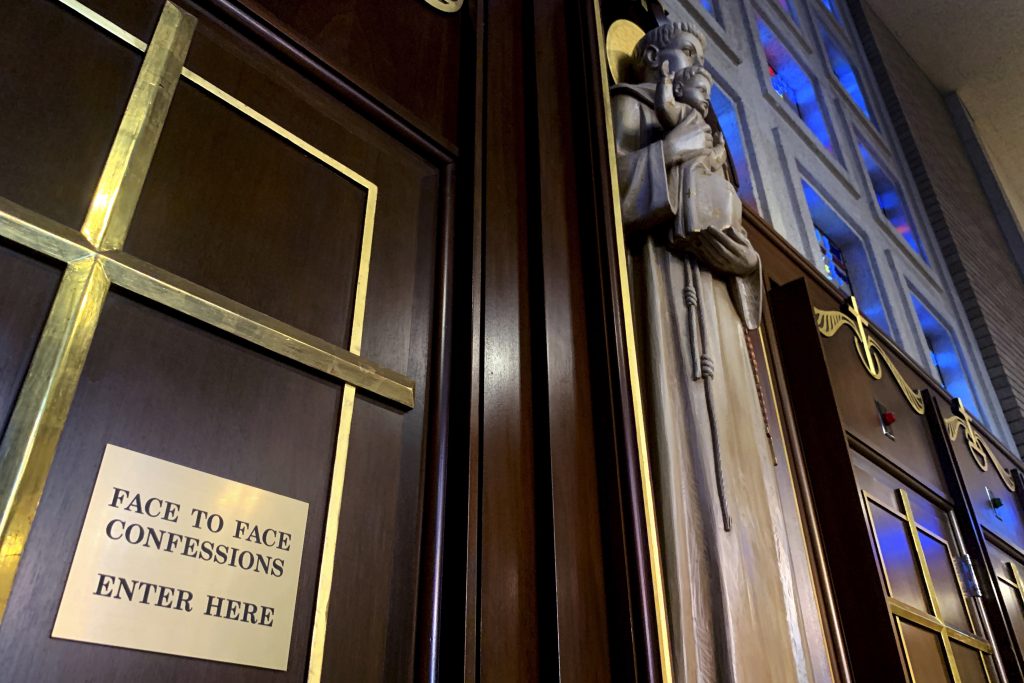
Protecting Confessions or Protecting Child Abusers?


California State Senator, Jerry Hill, has created a great uproar within the Catholic community. Senator Hill brought attention to one of the oldest accusations in the book, which is that priests not only molest children, but they also get away with it. We have all heard the puns made about priests liking little boys but we tend to ignore the horrific truth behind these jokes. Survivors of child abuse at the hands of Catholic priests goes on without the bat of an eye. Their painful stories go uncared for due to the religious hierarchy that makes it so that priests are untouchable beings within their communities. 


In the year 2019, Senator Hill pushed to pass the Senate Bill 360. This bill would have unseal the confidentiality between priests. If a priest were to confess to another clergymen about his involvement in child abuse, then the priest that is confessed to must then report this to the authorities. The purpose of this bill was to prevent the further abuse of more children and to bring peace to those who have suffered. 

Although this may sound fair to some, it is a complete violation and abuse of governmental power to others. Confession is a sacred moment in the Catholic faith where sinners are allowed to repent their sins in hope to release themselves from their worldly vices. The secretion and confidentiality of confession is what keeps the sacrament so pure. This is a vital step to achieving complete forgiveness from God and therefore, opening the doors for heaven. Furthermore, many would argue that the reason why confession works is because the sinner knows that they can reveal all of their sins and will only receive God’s judgement and forgiveness through the words of the priest at the confession stand. 

If the Senate Bill 360 were to be passed it would mean that priests would have to hold their tongues back during their own confessions. However, this bill would only apply to cases of child abuse. If a priest were to confess to other illegal activities, those wouldn’t be reported to the authorities. Nevertheless, it is still viewed as the state overstepping their role within the Catholic faith. Los Angeles Archbishop José H. Gomez, argues that if this bill is passed then it will not only be “a mortal threat to the religious freedom of Catholics” but it will also “allow the government to enter into our confessionals to dictate the terms of our personal relationship with Jesus.” Through these statements, Archbishop Gomez also called for the unity of all Catholic priests and followers around the world. Thus came the #KeepTheSeal campaign that would deliver thousands of signatures, letters and emails to the lawmakers in California in an effort to prevent the Senate Bill 360. 
So far, this case is unlike any other case we have reviewed in our class. This is a case of deciding whether the Free Exercise Clause trumps over the protection of the innocent young children of America. 

As a person who was raised Catholic, I completely understand the importance of the sacrament that is confession, however, I do not believe that it should be used to shield child predators. If a priest were to confess to abusing children and is repenting then he should also repent in the eyes of the American law. The damage that he has done to children should also be paid for during his time on Earth and not just during a twenty minute confession conversation. If a person truly repents for their actions then they should be prepared to pay their dues by the way the American court sees fit. There is no “prayer fee” assigned to a rapist that can fully bring peace to rape victims. Who is to say that they won’t do it again after confessing their sin?

The sacrament of confession will still be practiced and priests will still be trusted, in no way will this bill stop the free exercise of religion to Catholic followers. What this bill will do is bring justice to the children who cannot defend themselves and feel towered by the authority of Catholic priests. 
Despite my own opinion, Senator Hill has withdrawn the bill for this year due to the lack of support for it. There is hope for the bill to be reopened in the following years but not for 2019. Hopefully support for the Senate Bill 360 will gain momentum in the following months and even inspire other states to think of their own version of the Senate Bill 360. 

Child abuse is child abuse, rape is rape, it does not matter who does it, once it’s done the child’s life is changed forever. Why should the abuser’s life stay the same? 

For more information click on the links below: 

Angelus News: “SB 360 withdrawn by sponsor day before key hearing”

The Sacrament to Be: “Here’s some penance: The state wants to hear church confessions about abuse, let it”