Tuesday, October 4, 2022

Does a gathering of ten Jewish individuals constitute a synagogue?

    On January 10, 2021, Daniel Grand sent out an email to ten of his friends, inviting them to form a prayer group at his home on the Sabbath and on the Jewish high holidays. Grand is a member of the Orthodox Jewish faith, which requires him to pray with others three times a day. On Shabbat, the Jewish Sabbath, which takes place from sundown Friday until sundown Saturday, Orthodox Jewish men must gather in a group of at least ten. This group of worshippers is called a minyan. During the week, Orthodox Jewish individuals are permitted to drive to and from synagogue, but on Shabbat, driving is prohibited. Typically, Orthodox Jews, such as Grand, live within walking distance to their synagogue to make the three trips to synagogue manageable. Even a short walk, however, adds up when you have to travel there and back three times in one day, especially in poor weather conditions. Grand lives a little bit less than a mile from his synagogue, which meant he was walking about six miles on Saturdays in order to attend these mandatory prayer sessions. This was difficult during the cold winter months and in hot summer months, so Grand emailed ten of his friends, all members of the Orthodox Jewish community, asking if they wanted to gather at his house for prayer instead of making the trip to their synagogue. 


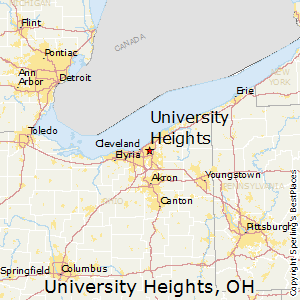
    Shortly after he sent out the invitation, Grand received a phone call from the mayor and a cease and desist letter from the city, regarding “2343 Miramar, University Heights, OH 44118, Planned Operation of Shul/Place of Religious Assembly.” When Grand spoke to Mayor Brennan, he was told that under Chapter 1274 of the University Heights Code, a special permit was required in order to host a religious gathering. Grand asked Mayor Brennan if ten Jewish individuals gathering would constitute a synagogue, to which Brennan replied “Yes it does, and if you do so in your home you will be in violation of [UHCO] Chapter 1274 for operating an illegal synagogue.” Grand decided he would get a permit in compliance with the city’s law, but after experiencing great backlash from the community, he dropped his application for a special permit and instead filed suit with the city, stating that it was unconstitutional to require such a permit. 



    According to Grand, it is a violation of his First Amendment right to free exercise of religion to enforce the permit requirement. By not allowing him and other members of his religious faith to pray in his home, Grand feels as if he is being singled out because he is Jewish and is not being able to carry out his religion as he desires. It is a requirement for individuals of his faith to pray three times daily, and on the Sabbath there must be a group of at least ten men for the prayer session. Traveling great distances on foot, especially in inclement weather, is a significant burden for Grand and members of his community, making prayer at his home the best option. Grand also feels as if he is being singled out because of his religion. Mayor Brennan stated that a group of ten individuals gathering constituted a synagogue, yet other members of the University Heights community are not held to the same standards. In practice, it appears as if the city has only enforced the requirement of permits for gatherings for members of the Orthodox Jewish community. Students from the local college routinely have gatherings at their homes, and other members of the community have large gatherings, all without permits or receiving cease and desist letters. This brings about the question, does University Height’s use of chapter 1274 to prohibit in-home prayer sessions violate the Orthodox Jewish community’s Free Exercise of religion?


    I believe that there is a violation of Grand’s Free Exercise of religion. There is a significant burden placed upon Grand by forcing him to only be allowed to pray in a traditional synagogue setting. Men of the Orthodox Jewish faith must pray as a minyan three times each Saturday, which can be taxing as they are not permitted by their faith to drive to synagogue on this day. By praying in his home, Grand is able to avoid difficult travel each Shabbat and is given easier access to fulfilling his religious obligations. Additionally, Grand simply wanted to invite ten members of his religious community to pray at his private residence; he did not intend on creating a synagogue. These gatherings were only intended to take place on days which members of his faith are not permitted to drive, meaning that there would be no issue with parking or any flows of traffic in the neighborhood. Use of a permit under chapter 1274 is required for “houses of worship,” but this simply does not qualify as one. It is simply a gathering of ten Orthodox Jewish individuals, just trying to exercise their First Amendment right to Freedom of Religion. 


    I also question the neutrality of this case. It is one thing if every gathering of ten individuals required a special permit, yet this does not appear to be the practice. People in the community were able to have gatherings of any type, as large as they wanted, without consequence, yet this one prayer group was singled out. A group of ten Jewish men gathering for prayer should be held to the same standards as a secular gathering, otherwise the religious group is being discriminated against. Additionally, there is also an issue of neutrality among religions, as the only group that has been told to refrain from gathering was a group of Jewish individuals. 


    This case is important as it creates a slippery slope. If these ten Jewish men are not allowed to gather for prayer, does this mean that other Jewish people cannot gather to celebrate Passover seders or have Shabbat dinners without a permit? Does this mean that a bible study group is considered a church? Are people allowed to hold secular events with members of the same faith as themselves? I worry that if this case is ruled in favor of University Heights and Mayor Brennan, people will not feel safe practicing their religion in the comfort of their home and that other cities may see this as an opportunity to discriminate against certain religious groups. 


https://www.clevelandjewishnews.com/news/local_news/university-heights-man-who-wanted-to-hold-prayer-group-in-home-sues-city-mayor/article_3edc4ad2-35e9-11ed-95f4-4f99ad56f756.html


https://ewscripps.brightspotcdn.com/8a/05/1051beb14e5da68f6fb7fd65a852/9007168712200178-grand-1594-ecf001-complaint.pdf  

Indianapolis Catholic High School Teacher fired due to his Sexual Orientation

In 2017, Joshua Payne-Elliott, a teacher at Cathedral Catholic High School in Indianapolis violated his agreement with the school and the Catholic Church and entered into a same-sex marriage. In the Archdiocese of Indianapolis, all Catholic school educators sign an agreement when they get hired stating that they will uphold the Catholic Church’s teachings not only in their professional lives, but in their personal lives as well. When Mr. Payne-Elliott entered a same-sex marriage in 2017, he tried to work out an agreement with Cathedral Catholic High School, since same-sex marriage is prohibited and looked down upon in the Catholic faith. In addition to this, it also violated his employment agreement with Cathedral Catholic High School. The Archdiocese of Indianapolis and Cathedral Catholic High School spent two years discussing and deliberating about the best plan of action to take regarding Payne-Elliott’s future with the school. Eventually the Archdiocese of Indianapolis gave Cathedral Catholic High School an ultimatum saying that if the school wanted to remain affiliated with the Catholic Church, then they would have to fire Payne-Elliott. Since they wanted to remain a part of the Catholic Church, Cathedral Catholic High School ultimately decided to part ways with Payne-Elliott since he went against the teachings of the Catholic Church. As a result of this Payne-Elliott sued the Archdiocese of Indianapolis claiming that the Archdiocese unjustly and illegally interfered in his agreement process that he was working on with the school. 

         In May of 2021, the Marion Superior Court of Indiana ruled in favor of the Archdiocese of Indianapolis, however, the Indiana Court of Appeals reversed this decision, ultimately allowing the lawsuit to advance. After this case was reversed, it was brought to the Indiana State Supreme Court. Here the court made a decision that maintained the same ruling made by the Marion Superior Court of Indiana and ruled in favor of the Archdiocese of Indianapolis. The court ruled that the Archdiocese had the right to maintain what they deemed as Catholic values within a private Catholic school, and that religious institutions have the right to decide matters of church government without state interference. 

         The main constitutional issue in this case is whether or not the Archdiocese of Indianapolis is allowed to step in in this situation and whether these actions violated the separation between church and state. Even though Payne-Elliott was trying to work with the school to come to an agreement, the court decided that the Archdiocese has a right to step in and intervene in this matter because it is a private school and not a public school. It was ruled that the Archdiocese also had a right to do this because of "ministerial exception" which was first used in Hosanna-Tabor Evangelical Lutheran Church and School v. EEOC. The “ministerial exception,” is an exception that gives religious institutions specific rights to control employment matters without interference from the courts. 

         I agree with the decision of the majority in this case. Constitutionally speaking, a private school has the right to do what they want in regards to maintaining their religious beliefs and views, and the Archdiocese has the right to step in an attempt to make sure that Catholic views and values are properly being transmitted. In Indianapolis, the purpose of these private Catholic schools is to spread the Catholic faith and beliefs to the next generation. Under the Catholic religion, same-sex marriage of any kind is strictly prohibited and looked down upon. As a result, the Catholic Church and Archdiocese believes that having a teacher in a same-sex marriage, does not properly convey and transmit the Catholic faith to future generation like these schools are intended to. In addition to this, when Payne-Elliott got hired at Cathedral Catholic High School, he had to sign a contract stating that he would properly uphold and transfer the beliefs and ideals of the Catholic Church in his professional and personal life. If Payne-Elliott wants to still teach, he could instead apply for jobs at public schools where he cannot be reprimanded or discriminated against due to his sexual orientation. When looking at previous cases such as Hosanna-Tabor Evangelical Lutheran Church and School v. EEOC and Our Lady of Guadalupe School v. Morrissey-Berru which both examined the idea of whether the teachers were “ministers,” we see that Payne-Elliott would not fall under this category. Payne-Elliott would not have the exemption of being a minister because even though he teaches at a Catholic school, he doesn’t teach religion and unlike the other teachers who were discriminated against due to their age and a sickness, Payne-Elliot was fired due to his sexual orientation which directly goes against the teachings of the Catholic Church. If this case were to have taken place under the same circumstances but in a public school, then the outcome of this case would have been completely different, but since it took place while teaching at a private school, the school and the Archdiocese have a right to part ways with him since he is in violation of the agreement made when he started teaching. This issue is important because it shows us how much different circumstances are in a private and religious institution as compared to a public institution. Some people might believe that there is not a big difference between private and public, but this case does a great job of showing how much more restrictive private institutions can be when compared to public institutions.

San Francisco Women Ask for Vaccine Exemption as Vaccines Stem from Aborted Fetuses

     In the case of Keene vs City and County of San Francisco, Selina Keene and Melody Fountila filed a lawsuit against the City and County of San Francisco, as well as Mayor London Breed and Director of Human Resources, Carol Isen. On June 23, 2021, the city mandated that all of its 25,000 employees be vaccinated by no later than November 1, 2021. The plaintiffs sued on the grounds that vaccinations are derived from aborted fetuses and therefore cause a large problem in their deeply rooted Christian beliefs. Stemming from these beliefs against abortion as well as the confidence of their own immune systems, the plaintiffs refused to get vaccinated. Along with refusing to get the COVID-19 vaccine, the plaintiffs also left their jobs. The questions at law are: is denying a religious exemption for a vaccination a violation of the free exercise clause? How does the fact that the COVID-19 vaccination contains aborted fetuses change affect this ruling?

    As I was looking into the science behind the plaintiffs claim that COVID-19 vaccines are made from aborted fetuses, I found an explanation from James Lawler, MD, who is also a practicing Catholic. Dr. Lawler said that COVID-19 vaccines do not contain any aborted fetal cells, but fetal cell lines are cells grown in a laboratory based on aborted fetal cells were used during research and development of the mRNA vaccines, and during production of the Johnson and Johnson vaccine. The defendants stated that there are no grounds upon which to assert the mistaken conclusion that the FDA-approved vaccines contain fetal cells or are otherwise derived from murdered babies. A majority of the plaintiffs' argument was based off of the grounds that the vaccines came from aborted fetal cells, and they were proved to be false claims by the FDA helping the defendant's argument. The plaintiffs' could have been better off arguing that the fetal cell lines were still against their religious views

    When looking at a case of employers being forced for vaccination, I find similarities and differences in the case Massachusetts Correction Officers Federated Union vs Baker.  In this case, the correctional officers are being required to get a COVID-19 vaccine to prevent the spread of the virus to the inmates. This case came up with a ruling that balancing that harm against the legitimate and critical public health interest in preventing the spread of COVID-19 by mandating the employees to be vaccinated, the Court finds the balance sides with the greater public good. The effort to maintain greater good interpretation in that case helps the defendants in this case. I see the parallels to my first blog post,  where there was a compelling state interest to protect the greater good. 

    Although I saw parallels to my first blog post about military men to correctional officers, I have to disagree with this logic in the particular case of Keene vs City and County of San Francisco. In the cases of military men and correctional officers, there is a higher compelling state interest as the scenery of the military and correctional facilities are unique. In the military, it is often that men and women are in nations where there are infectious diseases and they are sleeping in close quarters. This is very similar to correctional offices where inmates have a confined living space and are able to spread diseases at higher rates. I see a difference in the plaintiffs' argument, as they are city workers. They have the opportunity to go home and live in their own confined space. While I acknowledge the argument for the greater compelling interest of national safety, I feel as if Keene and Fountila should not have to sacrifice their religious beliefs in a scenario of lower magnitude. This belief is different in my stance from my first blog post, where I argued against the plaintiffs' exemption, as in my second blog post I do not feel as if the compelling state interest is as strong. A question I have at the end of seeing the Court side with the defendants' is: was the plaintiffs' incorrect terminology about aborted fetal cells as opposed to fetal cell lines what lost them the case?

WORKS CITED

Hillman, D. (2021, October 15). Mass.. corr. officers federated union V. Baker. Legal research tools from Casetext. Retrieved October 4, 2022, from https://casetext.com/case/mass-corr-officers-federated-union-v-baker 

Northern District of California US federal District Court case law. Justia Law. (n.d.). Retrieved October 4, 2022, from https://law.justia.com/cases/federal/district-courts/california/candce/ 

Oregon Legislative Information System. (n.d.). Retrieved October 4, 2022, from https://olis.oregonlegislature.gov/liz 

Person. (2021, August 19). You asked, we answered: Do the COVID-19 vaccines contain aborted fetal cells? Nebraska Medicine. Retrieved October 4, 2022, from https://www.nebraskamed.com/COVID/you-asked-we-answered-do-the-covid-19-vaccines-contain-aborted-fetal-cells 

Walley, A. M. (n.d.). Tampa Judge Grants 2 Military Members COVID-19 Exemption for Religious Purposes. blogger.com. 


Residents Sue South Carolina Over Funding For Religious School.

In September, South Carolina residents are suing the state over a legislative earmark in which the government allocated 1.5 million dollars to help the Greenville Christian Learning Center meet their goal of 14 million dollars to construct a new private school. The plaintiffs argue that the earmark violates the South Carolina Constitution, which "expressly prohibits the state from directly funding religious or other private educational institutions." It also violates the South Carolina Constitution's version of the Establishment Clause which prevents the legislature from enacting any "law respecting an establishment of religion" The money was intended to help the organization build a residential school intended to help serve disadvantaged middle school and high school students. The construction would include a six classroom school building, gender specific dorms, capable of housing 32 students, and an administrative office. 

   The Greenville Christian Learning Center is a religious organization that "has identified its primary purpose as religious education." The Center also provides released-time Bible teachings for students during the school day. The organization buses students from schools where they receive religious education before being bussed back to school. This organization faced backlash after the ear mark was initially announced. In response, it denied that it was intending to develop a private religious school, and instead claimed that it was "building a facility where public school students could seek academic tutoring, learn life skills and receive biblical instruction." But, as of October 2nd, the Greenville Christian Learning Center seems to have once again changed its plans, as it now intends to use the funds to help establish a charter school, a public school that does not charge tuition, but that operates separately from the state. When asked to explain how the Learning Center would operate a religious charter school, their executive director Janice Butler declined to comment. 

  South Carolina's decision to earmark funds for the Greenville Christian Learning Center to establish a religious school violates the 1st Amendment's Establishment Clause. When reaching this conclusion, one must first look to Madison's "Memorial and Remonstrance against Religious Assessments", in which he argues against a Patrick Henry proposal which would use taxpayer money to fund religious institutions. In his Remonstrance, Madison argued that governments respecting the establishment of religion actually harms the ability of free exercise, as "the same authority which can force a citizen to contribute three pence only of his property for the support of any one establishment, may force him tot conform to any other establishment in all cases whatsoever." Madison worries greatly that once one religion is recognized or endorsed by the government, then it could lead to greater suppression of the followers of another religious ideology. He also argues that "If religion be not within the cognizance of Civil Government how can its legal establishment be necessary to civil Government?" It is with these principles that the Constitution's Establishment Clause was written. It was intended to keep the government and religion separate, especially in regards to the direct funding of religion. 

South Carolina's actions also violate the Lemon Test, a test made of three parts, used to determine if a law respects an establishment of religion. If a law is found to violate even one of the parts, then it has violated the Establishment Clause. This earmarking violates all three conditions. First, it is clear that by providing a religious group with 1.5 million dollars to construct a religious school, it was not a secular action. The purpose of the law was to help support a religious institution and religious education. It is impossible to view this differently, as if the legislature was simply concerned about providing education to underserved children, they could have used the money in a secular manner, like increasing funding in public schools, or implementing a program in public schools to provide more assistance to the children in need. The second condition of the Lemon Test, is whether legislation has a primary effect of either inhibiting or promoting religion. Once again it is clear by allocating funds to a Christian organization with the purpose of constructing a religious school, that this condition has been violated. The school will promote religious education. The last part of the Lemon test, is determining whether the bill fosters excessive government entanglement. It is obvious that excessive government entanglement has occurred, as the ear mark constitutes direct aid from the government to a religious institution, and actively endorses a particular religion. By specifically setting money aside for a particular religious group, South Carolina does not even bother to try and work neutrally. The state is not only favoring religion over nonreligion, but is also endorsing a specific religious sect.


Friday, September 30, 2022

Baton Rouge Parish School System & 29:11 Mentoring Families School Event Or Religious Activity

Baton Rouge Parish School System & 29:11 Mentoring Families School Event Or Religious Activity


A local non-profit organization in Baton Rouge, Louisiana named “29:11 Mentoring Families” partnered with the East Baton Rouge Parish School System to host an event earlier this week. School officials state that this event was a Conference and College Fair held at the Living Faith Christian Center in Baton Rouge. For this event, more than 2100 students from Baton Rouge high schools were excused from classes to attend. In addition to this, the East Baton Rouge Parish School System stated they committed to spending $9,800 to help underwrite the cost of the “Day of Hope Student Conference & College Fair” as well as to bus students to and from the event. In addition to this, the founder of 29:11 Mentoring Families, Tramaine, stated the organization had a “real partnership with the school system”. Therefore, both the School System and organization were equally evolved in the Day of Hope Student Conference & College Fair. 

The 29:11 organized the event in reference to a biblical verse in the Book of Jeremiah and the homepage of its website shows a picture of the past event with young people on stage with up-raised hands with “Jesus” displayed on a big screen. The event was supposed to be a College Fair event; however, both 29:11 Mentoring Families and the East Baton Rouge Parish School System received backlash after both students and parents went on social media claiming the school field trip was more of a religious event which they didn't agree to. 

Several students stated that they were separated according to their sex. Once separated, the male students were asked to leave while female students watched three different series of lectures by three different guests. The female students said the three speakers spoke about personal experiences with being a virgin during college, sexual assault, and suicide. When the male students turned inside, they stated they engaged in passive games for prizes such as “who could do the most push-ups”. 

In addition to this, the students were also enraged that they had to participate in a prayer that the adults initiated. Overall, the students stated that the field trip was more of religious activity than a college and career fair event, and left with a feeling of being lured into the twisted religious event through the school-sponsored field trip.

The Chief of Communications for the East Baton Rouge Parish School System, Letrece Griffin, and other school officials reject complaints from both parents and students who attended the controversial “Day of Hope'' senior field trip. Instead, they stated that the Day of Hope was not a religious event and many of the religious components of prayers were spontaneous and initiated by the students. In addition to this, Griffin stated that the reason for the difference in treatment between the male and female students was due to the buses arriving late to the event. Due to the buses arriving late, the male sessions had to be drastically reduced, and the male session still addressed issues such as responsibility, healthy choices, and the importance of camaraderie.

The holding of this event is related to establishment clauses of the constitution. The “Establishment” clause of the First Amendment states that public schools “may not impose prayer or other religious practices on students, even if students are not required to participate”. Many parents and students believe that both the Baton Rouge Parish School System & 29:11 Mentoring Families Non-Profit lured students into attending the religious event they did not agree to. I do agree that this College-Fair was religious in its formation and organization. To begin with, the organization created this event in reference to a biblical verse, as opposed to a secularly created event. In addition to this, it was stated that this event was held in the past and was strongly connected to religious background. Already the creation and organization of this event were religiously rooted. To further this, the event was held in a church where it was stated that prayers were initiated and other religiously based discussions were discriminately placed on students. Lastly, it was stated that this event was partnered with the Baton Rouge Parish School Systems, which spent money on the event and was responsible for the transportation of thousands of students attending the event.

With these various things being established, it is difficult to argue that this event was not religiously rooted and therefore infringe on students' rights by being required to attend this event.   


https://localtoday.news/la/federal-judge-allows-louisiana-to-relocate-jailed-teenagers-to-angola-38611.html
https://www.dailykos.com/stories/2022/9/25/2125225/-High-School-Students-in-E-Baton-Rouge-Lured-to-Fake-College-Fair-Which-Was-Twisted-Religious-Event
https://www.mtsu.edu/first-amendment/page/religion-public-schools#:~:text=Under%20the%20%E2%80%9Cestablishment%E2%80%9D%20clause%20of,are%20not%20required%20to%20participate.

Thursday, September 29, 2022

Does Indiana’s Abortion ban violate The Satanic Temple’s Religious Beliefs?


The Satanic Temple intends to destroy Indiana’s near absolute ban on abortion.

On the basis that their religious rights are being violated, the temple has taken the Indiana Governor Eric Holcomb and state Attorney General Todd Rokita to court.


Indiana law criminalizes abortion except in cases where the life of the pregnant woman is at stake or in cases of rape or incest (up to 10 weeks). However, this violates beliefs of The Satanic Temple, specifically Tenets III and V. Tenet III declares that “one’s body is inviolable, subject to one’s own will alone” which does not make fetal tissue carried in a woman’s uterus and unborn child, contrary to Indiana law. Rather the Temple views fetal tissue to not maintain a separate existence or humanity from a pregnant woman. Furthermore, Tenet V decrees that “beliefs should conform to one’s best scientific understanding of the world”. In Indiana’s abortion ban, the early stages of fertilization where a zygote is created are referred to as an unborn child. Yet this contradicts scientific understanding since they do not see a zygote, blastocyst, embryo or nonviable fetus as an unborn child. Rather they are cells which are simply a part of a woman’s body that do not contain humanity.


Therefore, The Satanic Temple’s religious beliefs are being violated by the Indiana near abortion ban. While the Temple as an institution is taking on the state, the lawsuit does name a female member residing in Indiana who became pregnant without her consent and is unable to obtain an abortion in the state. The Satanic Temple has 11,300 members in the state and therefore brings the suit forward with themselves as plaintiff. 


Their grievances extend beyond their claim that the law violates the Free Exercise clause of the First Amendment. They argue that the ban goes against the 13th Amendment by imposing  involuntary servitude on its members through unwanted pregnancy. On top of this, they claim it violates the 14th Amendment by discriminating against pregnant women who engage in unprotected sex. Lastly, they claim that it violates the Religious Freedom Restoration Act, which prohibits any actor of the US government from substantially burdening a person’s exercise of religion unless a compelling government interest is present and is the least restrictive means of doing so.


But primarily, does Indiana’s abortion ban violate the ability for members of The Satanic Temple to practice their religious beliefs under the Free Exercise clause of the First Amendment? There are quite a few issues here as to whether the state of Indiana has a compelling state interest in regulating abortion, is using the least restrictive means to do so, is imposing a substantial burden on its citizens, and if the members of The Santanic Temple have a sincere religious belief being violated.


In my opinion, the last issue is the precipice on which all the others rely on. Arguing that their beliefs are insincere would be a fool's errand considering how their religion operates on 7 key beliefs which have been  historically coded into existence. It might be a bit difficult for people to wrap their heads around the fact that this religious group is called The Satanic Temple. In reality, its members do not worship satan. Rather, it is the literary satan which the temple uses as a metaphor for encouraging skepticism and rebellion against arbitrary authority. The Temple does have a recorded history of fighting in court for the right to abortion, but they have yet to be successful. To me, it seems that their beliefs are sincere. Yet while this record could serve as solid evidence of their sincere faith, their lack of success in court would be a detractor. If the court believes that their beliefs are sincere, up next comes the compelling state interest. There is certainly compelling state interest in allowing members of a religion to practice their beliefs and one to regulate abortions. However, one might say this is the most restrictive way of doing it. Only allowing abortions in cases of rape and incest, or if the life of the mother is threatened creates an incredibly high threshold. But what I find rather compelling is the substantial burden which would be placed on members of the Temple. Not only would they violate their religious beliefs by not having an abortion, if they were actually able to get one they could receive criminal persecution. Their freedom to exercise their religion has been demolished, and they could end up in jail.


https://thehill.com/homenews/3662156-satanic-temple-suing-indiana-over-states-near-total-abortion-ban/  

Tuesday, September 27, 2022

Does Enforcing Teachers to Respect Students' Name and Pronoun Preferences Infringe Upon the First Amendment's Free Exercise Clause?

Pamela Ricard had been a teacher for decades and was a middle school mathematics teacher in Fort Riley, Kansas when the following incident ensued. Following her schools implementation of diversity and equity training and guidelines last year, all teachers in the school were mandated to refer to their students by their preferred names and pronouns, even if they deviated from those in the schools records. In April of 2021 Ricard repeatedly failed to refer to one of her students by his preferred name and pronouns. Another student in the class had informed Ricard the student preferred he/him pronouns and the school counselor had also previously informed her the student wanted to be referred to by a new name. Ricard was reprimanded for not following the students' requests and put on suspension by the school for three days for what they classified as “staff bullying and harassment.” Following this incident teachers were further instructed that they were not allowed to communicate with the parents of the students regarding what names and pronouns students were requesting to be addressed as, unless a student indicated this communication was okay with them. If unwarranted communication with parents was found to occur the school would deem it as a “discriminatory act” and teachers would be disciplined. In March of this year Ricard filed a lawsuit against Fort Riley Middle School administrators under the basis that her religious beliefs as a Christian were being violated by having to comply with the school's policies.


Ricard requested she have a religious exemption from having to follow the policies the school had in place for respecting students' preferred names and pronouns. She requested this exemption because she “holds sincere religious beliefs consistent with the traditional Christian and biblican understand of the human person and biological sex” (Cohen, 2022). The complaint filed further went on to state, “Ms. Ricard believes that God created human beings as either male or female, that this sex is fixed in each person from the moment of conception, and that it cannot be changed, regardless of an individual person's feelings, desires, or preferences” (Cohen, 2022). She felt using a student's preferred name or pronouns was a direct violation of her expression of the religious beliefs she holds. Ricard was represented by the Alliance Defending Freedom (ADF) and senior counsel member Tyson Langhofer further went on to comment that “teachers should not be forced by school districts to willfully deceive parents or engage in speech that violates their deeply held religious beliefs” (Cohen, 2022).

The question at hand is whether or not the schools policies enforcing teachers to respect students pronoun and name choices is unconstitutional and prohibits Ricard from freely exercising her religion? This past May the U.S. District Court for the District of Kansas ruled that Ricard’s case was to proceed based on the basis of her First Amendment rights to freely exercise her religion. A judge decided Ricard could stop adhering to the particular aspect of the school’s policy that required her to use students’ preferred pronouns, but she was not exempt from addressing them by their preferred names. This case was voluntarily dismissed in late August of this year when school officials agreed to settle by writing a statement that resolved any disciplinary charges that were made against Ricard, along with $95,000. The school board also stopped enforcing the policy that teachers couldn’t communicate with their students' parents if a student was requesting to be referred to by different names or pronouns than what was listed in school documentation.

While ultimately there was no huge deciding factor made by the court, I disagree with the court's decision to allow Ricard to be exempt from the schools policy for referring to students by their preferred pronouns. Ricard believes the policies the school implemented infringes on her ability to freely exercise her religion because it forces her to engage in speech that violates the religious beliefs she holds. The school was not prohibiting Ricard from believing in her religious beliefs. There is a huge distinction between belief and action, and in this scenario she was not being forced to not express her beliefs. By respecting students' wishes she was not being prohibited from acting on and expressing her religious beliefs. She was not being asked to go against her beliefs and change her own name or pronouns. What her students chose to be called does not infringe upon her own beliefs, and calling them a certain name or pronoun doesn't prohibit her exercise of religion.


By not respecting students' wishes to be referred to by their preferred names and pronouns, Ricard was also indirectly pushing her beliefs onto the students. Within her classroom this makes it seem as though students are respected in a Christian manner in accordance with her religion. This does not keep the classroom setting neutral. By respecting their wishes she wasn’t being forced by the school not to believe in what she does. Being exempt from the policy is also in a sense favoring religion and makes it seem like the school is endorsing the establishment of her religious beliefs in the classroom. It shows that teachers can be exempt from things they feel violate their personal religious beliefs, which in a sense establishes religious favoring within schools. Ultimately on this basis, the school's policy does not infringe upon Ricard’s ability to express her religion, and being exempt from the policy is the school establishing her religious beliefs in her classroom.

Cohen, L. (2022, September 2). Kansas middle school teacher who was suspended for repeatedly misgendering student gets $95,000 from district in lawsuit settlement. CBS News. Retrieved September 27, 2022, from https://www.cbsnews.com/news/pamela-ricard-kansas-fort-riley-middle-school-teacher-disciplined-misgendering-student-95k-settlement/ 

Heipel, E. (2022, September 27). Teacher who refused to use students' preferred pronouns settles lawsuit against School District. Catholic News Agency. Retrieved September 27, 2022, from https://www.catholicnewsagency.com/news/252187/adf-settles-case-for-teacher-who-refused-to-use-students-preferred-pronouns 


Are Religious Ventures Backed by the First Amendment to Only Be Allowed to Hire Like-Minded Employees?

 “We serve everybody regardless of belief or background, personal experience but through the years, our entire history, we hire folks on our staff who share a common faith in Jesus Christ and have the ability to communicate that faith as well,” said Hopkins.

So do religious institutions have the support of the First Amendment to only hire employees of the same faith? The answer to this question does get murky, but for the most part the answer is yes, but why? It would be according to the rights under the First Amendment’s free exercise of religion and something known as a “ministerial exception,” which can pave the way for these religious institutions defending who they can employ. A Wyoming homeless shelter defends its religious freedom in hiring who they see fit in sharing their religious beliefs. The Wyoming Rescue Mission is a Christian nonprofit that believes in the power of sharing the gospel of Jesus Christ through deeds of service. Therefore, they hire those of the same faith that way their mission is served to the public. In terms of service, the mission provides shelter, clothing vouchers, free meals, and assisted programs of recovery and support in job training. This program has had astounding success of which include “60,862 free meals were served to the public; provided 41,037 beds for men, women, and children; enrolled 92 people into their Discipleship Recovery Program; 5,597 case management sessions; and gave 1,208 thrift store vouchers worth $39,649.92 that provided free clothing and essentials to families and guests in need. See? The Wyoming Rescue Mission is making an impact on the Casper community in more than one way. So what could be the problem? In 2020, the mission declined a non-Christian applicant for an opening job. The declined applicant decided to take action and filed a discrimination charge against the mission. After a long investigation, it was determined that the mission violated the Wyoming Fair Employment Practices Act of 1965 and Title VII of the Civil Rights Act of 1964 for refusing to hire the applicant. However, what was not considered here was the consideration of religious organization’s right of employment. Yet, an impossible question was asked of the mission. They either stand up for furthering their foundational beliefs by letting non-Christian applicants be hired, or face the repercussions of penalties and liability. 

In previous cases of Hosanna-Tabor Evangelical Lutheran Church and School v. Equal Employment Opportunity Commision and Our Lady of Guadalupe School v. Morrissey-Berru similarly, these cases had the plantiff’s filing discriminatory lawsuits against religious schools indicating that they were being discriminating against, while these religious schools rebuttled against these claims using the ministerial exception. The ministerial exception is a legal document that defends religious institutions by helping them be exempt from federal employment discrimination laws that would otherwise be considered discriminatory. Nonetheless, these religious institutions have a say in who they can employ as “ministers.” Yet what defines the broad term of minister? Is it merely someone who preaches the Gospel? Is it a figure-head that conducts services? The term minister was a little too broad and the US Supreme Court declared that the “ministerial exception” was based upon the religion clauses within the First Amendment and that the government cannot interfere with matters of faith. Therefore, the court looks at what the employees do that makes them carry out a religious mission. To reinstate, the exception instead ensures that the authority to select and control who will conduct the religion of the religious organization is the organization’s alone. 

So where does Wyoming Rescue Mission v. Equal Employment Opportunity Commission fall in line with these precedent cases? If the federal government decides to agree with the declined applicant, is the government overstepping its means of entanglement with its religious institutions? Is there a clear violation of the mission’s First Amendment right of free exercise of religion? After considering Hosanna-Tabor Evangelical Lutheran Church and School v. Equal Employment Opportunity Commision and the most recent precedent the Our Lady of Guadalupe School v. Morrissey-Berru, the key fact is understanding if the ministerial exception can be used by the mission to avoid the discrimination lawsuit. I would say that the mission can use this exception because the Supreme Court granted the exemption in Hosanna-Tabor when they looked at what the employee does. The questions that were looked at were: are the mission’s employees carrying out their faith? Yes. Are the employees actively spreading the Gospel? Yes. Therefore I would defend the Mission because of this exception. Furthermore, government entanglement in matters of religious affiliations is a clear no, no. In Lemon v. Kurtzman a series of questions were conducted on legislation concerning religion. The questions of a secular legislative purpose, must neither advance or inhibit religion, and must not result in an “excessive government entanglement” with religion. If the court decided with the non-Christian applicant and tried regulating religious organizations internal management affairs, there is a clear violation of government entanglement, inhibiting religion, and there would be no secular legislative purpose because it is directly concerning the applicant’s religious status. 

I believe letting the applicant win the case for discrimination is a clear violation of the Free Exercise Clause.The First Amendment protects the right of religious institutions “to decide for themselves, free from state interference, matters of church government as well as those of faith and doctrine.” Kedroff v. Saint Nicholas Cathedral of Russian Orthodox Church in North America. This case argues that the state of New York intruded on the religious freedom of the Saint Nicholas Cathedral indicating that New York violated the Religious Corporations Law of New York that prohibited the state to interfere in the church administration.

There is a slippery slope because discrimination is a just as an important issue as religion. The discrimination clause makes it illegal to discriminate based on race, color, religion, sex, national origin, disability, or genetic information. However, our Constitution does not highlight discrimnation policies, it highlights and favors religion. That being said, the Wyoming Mission should be able to hire the employees they see fit without government interference because they have the right as a religious institution to promote and hire people who will further their religious causes. “Requiring a church to accept an unwanted person who will not further their cause, and punishing the religious organization intrudes with the internal governance of the church choosing who will personify its beliefs” Hosanna-Tabor. I believe that one could infer that there could be a compelling state interest in regulating the religious organizations actions by interfering with their hiring process, which could lessen the impact of the organization’s work in providing many deeds of service to the Casper community. By imposing a non-religious applicant the state clearly violates the Free Exercise Clause which protects the rights of the religious groups to shape their own faith and mission through whatever means it sees fit. The Establishment Clause can also be invoked in this case because there should be no government involvement in such religious decisions. “For this reason, courts are bound to stay out of employment disputes involving those holding certain important positions with churches and other religious institutions” Hosanna-Tabor.

With that being said, do you think that the government is infringing upon this religious Wyoming mission by violating their exercise of religion by not letting them hire people only aligned with their views? Do you think the materstrial exception could be used to support the Wyoming Mission case? How can the slippery slope of discrimination and violation of the religious clauses of the Constitution be avoided? 

https://www.mtsu.edu/first-amendment/article/170/kedroff-v-saint-nicholas-cathedral

https://adfmedia.org/case/wyoming-rescue-mission-v-equal-employment-opportunity-commission

https://www.newspressnow.com/life/religion/wyoming-rescue-mission-statement-on-employment-discrimination-lawsuit/article_c6f58f87-17cd-5608-9e1d-d06eb3135a61.html

https://www.supremecourt.gov/opinions/11pdf/10-553.pdf

https://www.supremecourt.gov/opinions/19pdf/19-267_1an2.pdf

https://www.wyomingnewsnow.tv/2022/09/22/wyoming-rescue-mission-is-suing-government/

Do Catholic Universities Have a Constitutional Right to Employ Affirmative Action Practices?


Affirmative action is an aspect of the college admissions process that has been long criticized. Affirmative action was first introduced on a legislative scale in an executive order from President John F. Kennedy in 1961. The order decreed that in a professional environment, a contractor “will take affirmative action to ensure that applicants are employed, and that employees are treated during employment, without regard to their race, creed, color, or national origin.” Within the context of college admissions, affirmative action is intended to alleviate some of the obstacles and discrimination faced by racial minorities, as it allows colleges and universities to consider the race of their applicants.

There have been many Supreme Court cases regarding affirmative action, and the practice is often the source of much political discontent. The Supreme Court is scheduled to hear two cases regarding affirmative action this year, and these decisions have the potential to end the practice altogether. In response to these cases being put in front of the Supreme Court, Georgetown University, a Jesuit institution, filed an amicus brief, along with 56 other Catholic Universities alleging that because of their status as religious institutions and the necessity of diversity to their religious mission, their right to consider race in the application process is protected under the free exercise clause of the first amendment.

The brief discusses the admissions process as it stands at many of these universities, defining it as a holistic approach that does take race into account with the purpose of maintaining a diverse student body as to further their goals rooted in Catholicism. The brief argues that because of their status as Catholic institutions, the included universities have a unique perspective on the affirmative action issue. The brief begins with a discussion of Catholic teachings, arguing that they “emphasize the dignity of each individual and the importance of service to the underrepresented.” Because of this pillar of Catholic education, diversity within Catholic institutions is vital to furthering their ultimate pedagogical goal. The brief outlines four reasons for the importance of diversity within Catholic higher education: First, the dynamic environment that comes along with diversity furthers Catholic values such as rigorous thinking and empathy. Second, a diverse environment leads to personal growth, which goes towards the Catholic pedagogical goal of tolerance. Third, social justice is a pinnacle of Catholicism, and thus it is the responsibility of Catholic universities to provide opportunities to underrepresented groups. And finally, it is a mission of Catholic education to create thoughtful, creative, and diverse leaders, which will only result from a diverse educational environment.

After outlining the argument for why diversity is so important for Catholic higher education, the brief argues that because of this, the right of Catholic universities to use affirmative action processes to ensure a diverse class of students is protected under the free-exercise clause of the first amendment. The brief cites multiple free exercise cases tied to education, including Wisconsin v. Yoder, a Supreme Court case in which under the free exercise clause, Amish families were granted the right to withhold their children from school because they believed a traditional education went directly against Amish teachings. The brief argues that all of these cases emphasize the importance of people being able to exercise their religion freely, and goes on to make the argument that the issue of allowing Catholic universities to continue their affirmative action practices is no different, Because diversity is so closely tied to the universities’ religious mission, not allowing them to continue to attempt to create as diverse a class as possible inhibits their free exercise.

While I can agree with the authors of this brief that a diverse educational environment is important, I do not believe that the end of affirmative action practices would inhibit the free-exercise of Catholic universities. All of the Catholic principles discussed in the brief could easily be secular principles, and the brief does not make a strong argument as to why, exactly, they are tied to Catholicism. Additionally, there are other efforts that can be made for Catholic universities to secure a diverse class of students without affirmative action, such as increasing outreach and making students of color feel safe on campus so that other students of color are more compelled to apply in the future. Because of the other alternatives that can be taken, the end of affirmative action would not inhibit Georgetown or the other 56 universities’ free exercise of religion–while affirmative action being abolished might make it more difficult for colleges to increase their diversity, it would force them to consider other ways to foster a diverse and inclusive campus environment.

Monday, September 26, 2022

Does Firing a Nurse Practitioner Based on Her Religious Beliefs Concerning Abortion Violate her First Amendment right?

Paige Casey is a nurse practitioner who worked for a MinuteClinic in Alexandria, Virginia. For more than two and a half years the clinic exempted Casey from prescribing certain contraceptive drugs or devices that aid in preventing pregnancy to honor her Catholic beliefs. Specifically, the lawsuit cited Plan B and Ella which are commonly known as the morning-after pills. After writing a request to the company, which stated her specific Catholic beliefs, Casey was granted an accommodation. There were no incidents or complaints that were a result of this accommodation. The lawsuit claims that in April of 2021, this all changed, and the Clinic abruptly fired Casey solely for refusing to prescribe "abortion-causing" drugs. The Rhode Island-based company announced that its employees could no longer avoid prescribing abortion-inducing drugs along with other forms of birth control. It is important to note that Plan B and Ella are the only drugs that were specifically named in the lawsuit. According to the Food and Drug Administration, Plan B and Ella are both drugs classified as "emergency contraception" and the Administration states that neither drug has the ability to terminate an already existing pregnancy. In accordance with Catholic teachings, however, life begins at conception when a sperm fertilizes an egg. This lawsuit aims to remedy the injuries that Ms. Casey suffered to her conscience rights and the related costly harms.   

Casey, who primarily worked at a MinuteClinic in Alexandria since 2018, again asked for an accommodation for her religious beliefs in December. In January and March, the company reiterated that they would no longer accommodate her request. Effective April 1st CVS fired Casey.       

This case introduces the question of whether or not Ms. Casey's First Amendment Right to Freedom of Religion was violated by CVS Health because of her refusal on religious grounds to sell and dispense certain contraceptive drugs. This brings to light the Constitutional issue of Ms. Casey's ability to express her own religious beliefs while also working for the clinic.  

When looking at Casey's lawsuit it is important to reflect on Obergefell v. Hodges. This is a case where in which a group of same-sex couples sued their state agencies in Ohio, Michigan, Kentucky, and Tennessee to challenge the constitutionality of those states' bans on same-sex marriage or the refusal to legally recognize these marriages. The plaintiffs in the case argue that the state's statutes were a direct violation of the Equal Protection Clause and Due Process Clause of the Fourteenth Amendment. In a 5-4 decision, the court held that the Due Process Clause of the Fourteenth Amendment guarantees the right to marry as one of the fundamental liberties it protects. The Equal Protection Clause also guarantees the right of same-sex couples to marry because denying this right would deny same-sex couples equal protection under the law.  

To reiterate, in Ms. Casey's lawsuit, she is asserting that she lost her job because she refused to sell contraceptive drugs because it violates her Catholic beliefs and opposition to abortion. This situation points towards a slippery slope because it permits clinic practitioners to allow their religious beliefs to impinge on the rights of clinic patients and customers. In addition, the science iterates that the two drugs cited in the lawsuit are not drugs that can abort an already existing pregnancy, but rather they are preventative measures that are taken before reaching this point. The clinic made accommodations for Casey, but there comes a time when one is simply not meeting the requirements of the job itself. The clinic is not preventing Casey specifically from practicing her own religious beliefs. The clinic is requiring that as a licensed nurse practitioner in the state of Virginia she must fulfill the requirements of the job which is in a secular business. Her refusal to dispense contraceptive medications violates basic medical practices which require practitioners to listen to their patients' needs as well as fulfilling the sale of a product that does not even require a medical prescription. In Obergefell v. Hodges, the right to marry is one of the fundamental liberties that the Fourteenth Amendment guarantees, which means that the states can't impose social or religious values on same-sex marriages just like Casey can't dictate what treatments the patients who come to the clinic can have based on her own values and beliefs. 

Wednesday, September 21, 2022

Gerald Groff v. DeJoy

Gerald Groff was an employee at the Quarryville Post Office for the USPS, he then transferred to the Paradise Post office as a Rural Carrier Associate in 2012. Groff was hired in this new position as an RCA, and this position means that the carrier must be able to work depending on the office, must be able to work weekends, and RCAs are not guaranteed a specific schedule based on needs. In 2016 this USPS office signed a contract with Amazon, stating that packages must be delivered on Sundays as well. Up until this time everything was working out, Groff had negotiated with his postmaster to make sure he had Sunday’s off as he identifies as an evangelical Christian and needs Sundays off for his Sunday Sabbath. However, once the Quarryville station signed with amazon Patricia, Groff’s postmaster, told him that she could no longer give him all Sundays off as they have peak times. Groff asked to be relocated to the Holtwood station, which had not yet signed a contract with Amazon. Brian Hess was Groff’s new postmaster and he knew that groff had moved to avoid Sunday delivery, but no one ever promised Groff all Sundays off. In 2017 Holtwood post office signed with Amazona and Groff would be required to work on Sundays. Management gave Groff an accommodation, he could find someone to cover his Sunday shifts or show up late on Sundays once his service was over. In May of 2018 Groff had missed 24 scheduled Sundays. Before facing termination due to 24 work absences, Groff decided to resign and sue the post office for refusing to have religious accommodations under the first amendment free exercise and the Equal Employment Opportunity Act of 1972.  

First Groff sued under a federal court stating that the post office did not offer religious accomodations, including an Evangelical’s Sunday Sabbath. The federal court ruled for the Postal Service Office, then Groff appealed to the 3rd circuit where the ruling also favored the Post Office. Groff argued that exempting him from Sunday Work would have a more than de minimis cost on USPS. Groff has appealed to the Supreme Court and is holding on to a response.


I think that USPS should exempt Groff from working on Sundays even though he does not qualify due to his position, but I feel like his first amendment free exercise right is being violated because in this company RCA’s do not have the position to have a flexible schedule yet higher positions do; also Sunday Sabbath is not something Groff all of the sudden made up, he has been transferring jobs constantly and requested several times accommodations, therefore the sincerity is truthful. I think that stating the harm that his Sunday Sabbath has on USPS is unreasonable, and the fact that Groff had Sundays off before USPS signed with Amazon means that it is possible to make his accommodations happen, but USPS is putting their profits first before their employees.