Sunday, April 13, 2025

Natural Born Right to Life vs Religion

A doctor at the Lankenau Medical Center, Dr. Joseph Bushra, requested a religious exemption from his hospital's mandatory COVID-19 vaccine policy. Bushra’s specific position in the hospital's emergency department requires him to work in person with his patients on a daily basis, some of whom are carriers of the COVID-19 virus. The doctor feels that frequent testing and wearing a mask are proper accommodations that will prevent the spread of the deadly virus. In opposition, the hospital saw this as a high-risk situation. While the Main Line Health (MLH) organization offers medical and religious exemptions, they denied him on the basis that patients coming to the hospital are in a highly vulnerable medical situation. This resulted in Bushra suing the healthcare system for discrimination under Title VII of the Civil Rights Act and the Pennsylvania Human Relations Act (PHRA). 

As a member of the Tenth Presbyterian Church in Philadelphia, Dr. Joseph Bushra gave four reasons as to why the vaccine violates his religious obligations/beliefs. His first reason is that the composition of the vaccine utilizes cells obtained from aborted fetuses. He explains, “My Christian worldview teaches that human life begins at the moment of conception, and that abortion, which ends a human life, is therefore murder”. The second reason was that he had already contracted the virus in previous months, and the risks that come along with the vaccine outweighed the risks of him obtaining the virus once again. He also felt that he had a religious obligation to ensure that the scarce vaccination be handed out to those who are truly in need rather than wasting one on himself. Lastly, Bushra states it is a violation of his First Amendment Free Exercise rights to go against his conscience as his Christian faith advises.

The constitutional question at hand is whether it is a violation of Dr. Joseph Bushra’s free exercise rights to deny his request for a religious exemption to the COVID-19 vaccine. Or does the government have a compelling state interest in protecting medically vulnerable individuals from risk of contracting a deadly virus? Does the position of an individual matter when considering religious exemptions? 

A comparable case, given the compelling state interest of the government to uphold national security and health, is Goldman v. Weinberger. In this case, an Orthodox Jewish individual in the United States Air Force was not allowed to wear his yarmulke while on duty. A yarmulke is a religious head covering worn as a sign of respect, but was refused due to the Air Force's strict policy regarding no headgear inside. The Supreme Court ruled that the Air Force did not violate the free exercise clause, as they must be examined with less scrutiny for their intention to protect the nation. Their policy is made to ensure orderly conduct and uniform attire, which cannot be contested in terms of our nation’s defensive line.


While I see both sides of the argument, I am leaning towards the side of the Main Line Health Incorporation. If Dr. Joseph Bushra were not a physician in an emergency room, the conditions of this case would be extremely different. While Bursha has the right to deny vaccination, he does not have a natural-born right to be a doctor in an emergency medical environment. There is a clear and present danger in having high-risk patients suffering from serious illnesses and at varying ages to be in the presence of an unvaccinated doctor who must also service patients with COVID-19. As someone who has acquired COVID-19 twice while taking the precautions seriously, Bushra’s claim that a mask is enough is inaccurate. If he worked in a different medical facility with a less susceptible environment or had a different occupation, I could understand the religious exemption. I’d argue that jobs in the medical field should be evaluated with less scrutiny in cases similar to this. Is the cost of a life worth a workplace religious exemption? There is a natural right to be alive, but not to be a physician in an emergency room. 


Sources:

https://religionclause.blogspot.com/

https://www2.ca3.uscourts.gov/opinarch/241117np.pdf

https://www.govinfo.gov/content/pkg/USCOURTS-paed-2_23-cv-01090/pdf/USCOURTS-paed-2_23-cv-01090-0.pdf

https://www.google.com/search

https://www.oyez.org/cases/1985/84-1097

A Pledge Too Far: When Loyalty Oaths Violate Religious Freedom

    Brianna Bolden-Hardge is a Jehovah’s Witness and a state employee of the California Franchise Tax Board. Bolden-Hardge began working in 2016 and did not sign the loyalty oath at the beginning of her employment. The purpose of this oath is to ensure that public employees pledge their loyalty to both the United States and the State of California Constitutions. Bolden-Hardge later applied to work for the Office of the State Controller and was offered a higher-paying position. As part of her employment agreement, Bolden-Hardge was asked to take a loyalty oath. Bolden-Hardge claimed that her faith prevents her from “sweaing primary allegiance to any human government” over the Kingdom of God. Bolden-Hardge requested an accommodation to sign with an addendum specifying that her religious allegiance was first in her life, and that she would not take up arms. The Controller’s Office denied her request for accommodation and rescinded the job offer. Bolden-Hardge returned to her job at the California Franchise Tax Board, which then required her to take the oath but permitted her to include an addendum like the one she intended to use with the Controller’s Office. 

    Bolden-Hardge sued the Controller’s Officer under the First Amendment’s Free Exercise Clause, Title VII of the 1964 Civil Rights Act, and other provisions. Bolden-Hardge v. California State Controller is now in the United States District Court for the Eastern District of California. 

    The constitutional issue at hand in this case is whether the Controller’s office violated Title VII and the First Amendment’s Free Exercise Clause by rescinding its job offer to Bolden-Harge because of her stated need for religious accommodation to the Controller’s Office’s requirement that she sign a loyalty oath.

    To conclude whether Bolden-Hardge’s First Amendment rights were violated, I draw on precedents set in West Virginia State Board of Education v. Barnette (1943), Sherbert v. Verner (1963), and Employment Division v. Smith (1990). 

    West Virginia State Board of Education supports Bolden-Hardge’s claim. The key holding of this case was that the government cannot compel individuals to affirm a belief or pledge loyalty that violates their conscience. Like the students in this case who refused to salute the flag on religious grounds, Bolden-Hardge objected to signing a loyalty oath that conflicted with her religious duties. Her objection was not rooted in disloyalty to the United States government, but rather in not being forced to declare allegiance in a way that violated her religious convictions. This case supports Bolden-Harge’s claim that compelling her to sign a loyalty oath without an accommodation for her religious beliefs violates her free-exercise rights.

    Sherbert’s ruling supports Bolden-Hardge’s claim, as the case held that the government cannot impose a substantial burden on religious practice without evidence of a compelling interest. The state's refusal to accommodate Bolden-Hardge’s request for an addendum can be seen as a substantial burden on her ability to live out her faith. The state would need to prove that denying the accommodation was necessary and the least restrictive way to achieve a compelling state interest. The state’s compelling interest claim to preserve loyalty and commitment to the constitution and government would be undermined by the fact that another state agency (Franchise Tax Board) granted the same accommodation. 

    Employment Division could support the state's claim, as this case held that neutral, generally applicable laws that incidentally burden religion do not violate the Free Exercise Clause. Using this precedent, the state could argue that the loyalty oath is a neutral requirement for all employees and not targeted at any religion. However, because other agencies allowed the accommodation, Bolden-Hardge could argue that the oath is not consistently applied, weakening the state’s defense based on Employment Division.

    Considering the facts of the case and these precedents that could be applied, I conclude that the denial of Bolden-Hardge’s request for a religious accommodation to sign the loyalty oath with an addendum to comply with her religious beliefs and the subsequent revoking of her job offer is a violation of her free exercise rights. This is because I believe the state can still achieve its goal of preserving loyalty to the Constitution through less restrictive means, which in this case would be through modifying the oath for religious purposes so Bolden-Hardge can take it in good conscience. In Barnette, the Court held that individuals cannot be compelled to express loyalty in ways that violate their conscience, and Sherbert requires a compelling interest pursued by the least restrictive means. The state’s refusal fails this test, especially since another agency had previously accepted her addendum. Though the state may argue the oath is a neutral, generally applicable requirement under Smith, its inconsistent enforcement undermines that defense. Therefore, denying Bolden-Hardge the ability to affirm her loyalty in a way consistent with her faith was unconstitutional.

Sources: 

https://religiousfreedominstitute.org/bolden-hardge-v-california-state-controller/

https://www.courthousenews.com/ninth-circuit-revives-religious-bias-suit-over-california-loyalty-oath/

https://law.justia.com/cases/federal/appellate-courts/ca9/21-15660/21-15660-2023-04-03.html


Religious Conscience and Compelled Speech: A Closer Look at Schroeder v. Treto

In a case that underscores the ongoing tension between religious conscience and state-mandated health care regulations, a federal court in Illinois recently struck down part of the state’s Health Care Right of Conscience Act (HCRCA). The case - Schroeder v. Treto - involves pro-life pregnancy centers and doctors who challenged an amendment to the HCRCA that required them to discuss the risks and benefits of abortion and childbirth in order to qualify for liability protections. These healthcare providers (physicians and otherwise) argued that this requirement violated their First Amendment rights, both in terms of freedom of speech and free exercise of religion.


The case was brought by attorney Thomas Schroeder, who represented several Illinois pregnancy centers and medical professionals with religious objections to abortion. They filed suit against Dr. Sameer Treto, the Director of the Illinois Department of Public health, in his “official capacity”. Schrooeder and the plaintiffs argued that Illinois’ amended law unlawfully compelled speech and punished conscience-based refusals to promote or refer abortions.


The federal district court agreed, in part. While it struck down the broader speech requirement, it also upheld a more limited provision: if a patient explicitly asks about abortion services, the provider must either refer, transfer, or give them a list of providers - but only if they intend to use the HCRCA as a defense in a malpractice suit. The court reasoned that this narrower requirement was a reasonable, triggered obligation and did not violate constitutional rights.


What’s at Stake: The Speech vs. Religion Debate


This case sits at the intersection of compelled speech and religious liberty, and to me, that’s what makes it so compelling. It raises the question: can the state force religious providers to speak about something they morally and religiously object to? And if so, where is the line between public interest and individual conscience? The constitutional issues is two-fold, and involves both Free Speech and Free Exercise:

  1. Free Speech: Under NIFLA v. Becerra (2018), the Supreme Court held that the government cannot compel pro-life pregnancy centers to deliver state-scripted messages about abortion services. The logic from NIFLA applies almost directly to Schroeder. The Illinois law required doctors and clinics to deliver a government-approved message - even if it contradicted their values. That’s not informed consent - it’s compelled ideology.

  2. Free Exercise of Religion: For many of the doctors and staff at these clinics, opposition to abortion isn’t just a political view - it’s a religious conviction. Compelling them to speak positively about a practice they consider morally wrong not only violates their conscience, but pressures them to participate in what they see as a sinful act. While the court didn’t find the Free Exercise claim as compelling here, I personally think the claim deserves more attention. Even if the law is “neutral and generally applicable,” as seen in Employment Division v. Smith (1990), when speech and religion overlap, the burden is hard to ignore.

Constitutional Analysis and Broader Implications

The constitutional tensions in Schroeder v. Treto are directly tied to both the Free Speech Clause and the Free Exercise Clause of the First Amendment. What makes this case so interesting - and in my eyes, important - is the way it forces courts to reason through what counts as a “burden” on religious conscience when that burden comes through compelled professional speech instead of direct religious conduct.

Relating to Previous Decisions

This case builds on the foundation laid by National Institute of Family and Life Advocates (NIFLA) v. Becerra (2018), in which the Supreme Court held that the state could not compel pro-life clinics to post government-mandated notices about abortion services. The Court in NIFLA emphasized that even “professional speech” is protected speech, and the government cannot override that protection simply because it thinks certain information is important. The speech required by Illinois’ HCRCA amendment - especially the section the court struck down - mirrors the flawed logic in NIFLA: that the state can mandate disclosure to be ideologically loaded under the banner of “neutral information.”

In terms of religious freedom, the case also raises questions under the framework of Employment Division v. Smith (1990), which held that neutral and generally applicable laws do not violate the Free Exercise Clause, even if they incidentally burden religious practice. However, more recent cases like Fulton v. Philadelphia (2021) and Masterpiece Cakeshop v. Colorado Civil Rights Commission (2018) (which has been seen in a previous blog post) have chipped away at Smith, especially when laws aren’t truly neutral in practice or allow for secular exceptions. While the Illinois law might look neutral on its face, it’s religious providers who are disproportionately affected - and who are being asked to violate their core beliefs or lose legal protection. To me, this feels more targeted than incidental.

Implications for Religion and Law

The biggest implication of this case is that it tests the limits of religious conscience in a post-Dobbs landscape (Dobbs v. Jackson Women’s Health Organization overturned Roe v. Wade, allowing states far more control over abortion regulation). As states regulate abortion more aggressively, they will inevitably clash with individuals and institutions that hold deeply religious objections. Cases like Schroeder remind us that these clashes aren’t just about physical conduct (like refusing to provide a service), but also about forced participation in speech and messaging.

If states can compel speech about abortion - even just in “neutral” clinical settings - this threatens the constitutional protection that insulates private religious conviction from governmental control or endorsement. The line between public regulation and private religious conviction gets more blurred, which jeopardizes the integrity of our society, which is pluralistic and built on a variety of different values. Once we accept that conscience can be overridden for the sake of "informational balance," we open the door to compelled speech in any profession where religious views diverge from state policy.

Why This Case Is Important

This case is important, to me, because it points to a deeper shift in both our laws and broader cultural dynamics. In an increasingly polarized world, courts are being asked to balance competing rights: the right to access information (and abortion), and the right to abstain from ideological expression. But constitutional protections - especially around speech and religion - don’t disappear just because the speaker works in health care.

Religious freedom doesn't just mean the right to worship; it also means the right to live out those beliefs in professional and civic life. If religious providers are forced to speak words that directly contradict their beliefs, that isn’t neutrality - it’s coercion. And when the government conditions legal protection on compliance with compelled speech, it’s effectively punishing religious dissent.

So the deeper constitutional question isn’t just whether Illinois’s law “helps” patients - the real question is whether the First Amendment stops the state from using individuals to push its own message. And based on the reasoning in NIFLA, Masterpiece Cakeshop, and Fulton, the answer should be yes.


Links to Cases Referenced:


https://www.christianpost.com/news/mandate-for-pro-life-centers-to-promote-abortions-struck-down.html


https://www.oyez.org/cases/2021/19-1392

https://www.oyez.org/cases/2017/16-111

https://www.oyez.org/cases/2017/16-1140

https://www.oyez.org/cases/2020/19-123

https://www.oyez.org/cases/1989/88-1213

https://www.oyez.org/cases/1971/70-18


Monday, April 7, 2025

Do cities have the right to enact zoning laws inhibiting free exercise?

Anchor Stone is a church that aims to bring Christian beliefs to first generation Taiwanese Americans. The church is based in Santa Ana and hoped to move away from gathering in homes and temporary spaces as their membership has grown. After finding land to purchase, Anchor Stone discussed with the city to ensure they would be able to use the space for religious services. The property was zoned in a professional district meaning the church would have to obtain a conditional use permit (CUP) after purchase. The city told the church that they would be able to obtain a CUP with no difficulty and could use the property as a church.
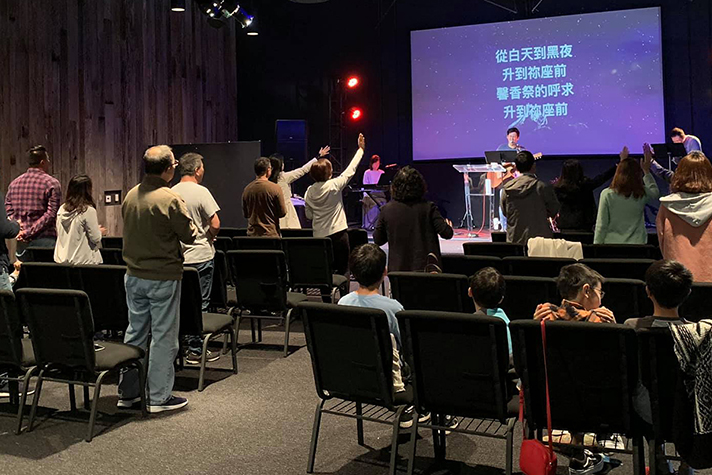
Church Sues City After Being Prohibited From Worshiping on its Property

         Once the church purchased the land, however, the city denied Anchor Stone’s CUP request despite what the city had told them prior to purchase. Apparently, the churches property did not fit their “general plan” document, and the designation of the property prevents the land from being used as a place of assembly. Anchor Stone also claims that the city officials were hostile towards them and their request.

         Anchor Stone tried to appeal the denial based on the Religious Land Use and Institutionalized Persons Act of 2000 (RLUIPA). The law was created to prevent “religious institutions from discrimination in zoning and landmarking laws” and ensure that land regulation does not significantly burden a religious organization’s right to practice. However, since RLUIPA is a federal law, the city of Santa Ana argues that they do not have to comply. The U.S Department of Justice believes otherwise when discussing their statement on the case. This could indicate how the government could react on this case considering that a large government entity sides with the church. 

         In February, First Liberty Institute filed Anchor Stone Christian Church v City of Santa Ana arguing that Santa Ana is violating the Free Exercise clause and RLUIPA by their zoning laws. The zoning laws of Santa Ana require churches to obtain discretionary approval through a CUP, but secular establishments are not required too. The Liberty Institute explains “the City’s actions are plainly discriminatory” and that “the city has no explanation why hundreds of employees ‘assembling’ in multi-level offices for work on Monday is permitted, but a few dozen congregants gathering for worship on Sunday is not.” The general plan that the city uses to justify their decision, First Liberty argues, is full of inconsistencies as assembly is not even directly mentioned within the document and allowed other establishments of assembly such as art galleries and restaurants to open. This indicates non-neutrality towards religious groups as they are not given the same opportunities as secular organizations. As well, the city seems to be drawing conclusions based on a vague law. While in some scenarios this could be fine, since the case relates to Free Exercise, strict scrutiny must be enacted as the interpretation of the bill burdens the Free Exercise rights of Anchor Stone as now they are limited in their ways to congregate without an official church.

First Liberty describes possible discrimination against this specific establishment stating “gross favoritism and discrimination” as they offered another church a permit across the street. The church is primarily Chinese and Taiwanese Americans, possibly going against white Christian nationalist ideals. That poses possible issues with the Establishment Clause as the Santa Ana would be directly favoring one religious group over another. 

         The City of Santa Ana believes that the claim of religious burden is the churches way of trying to work around city laws. A councilman described that there is a compelling interest in denying the church a CUP because of “public health and safety” as the church would increase traffic.

         In my opinion, I believe that the city of Santa Ana is burdening Anchor Stone’s Free Exercise rights. Santa Ana refusing to allow Anchor Stone to open while allowing secular establishments of assembly shows discrimination towards religious groups. While the city of Santa Ana claims there is a compelling interest, since the compelling interest regards safety and traffic issues, the denial of opening should apply to all businesses. If a movie theater were to open, the risk of increased traffic and decreased public safety would still apply, but they would allow the establishment to open as they would not be subject to discretionary approval. This shows how Santa Ana’s zoning laws are not generally applicable nor are neutral as they only apply to religious organizations. They are creating a difference between secular and religious assembly which should be treated equally based on the facts of this case and the compelling interest in which the city claims. As well, the zoning laws substantially burden Anchor Stones Free Exercise of religion as now they are unable to congregate all together on Sunday which is an ideal of the Christian religion. While the monetary losses the church faced are indirect burdens of the zoning laws, it also prevents them from purchasing other land in which they could open a church to ensure the practice of their religion. I also question the motives of the zoning laws in Santa Ana. The city originally assured Anchor Stones that they would be eligible for a CUP, but after purchase, the city denied their permit. This fact could imply that the zoning laws were changed after Anchor Stone met with the city originally, possibly indicating the city’s motive was to directly burden the Free Exercise of Anchor Stone. 

         This case could have underlying similarities to the Church of the Lukumi Babalu Aye, Inc v. City of Hialeah. When the city of Hialeah heard that the Church of Lukumi Babalu wanted to establish a church, they quicky passed ordinances to inhibit their practice of Santeria which involved animal sacrifices. The court sided with the church as they rationalized that the ordinances were passed to target the religion. This set a precedent that a law created to suppress religious expression is not neutral and violates the Free Exercise clause. This could relate to the case of Anchor Stones, as the changes in zoning could have been motivated by news that the church wanted to open as the city originally gave them reassurance. While the zoning law may seem facially neutral, since the law potentially was directed at this group, the law would be unconstitutional based on the precedent of the Church of the Lukumi Babalu Aye, Inc v. City of Hialeah.

    If this case rules in favor of the church, there are huge implications on the state governments as RLUIPA would apply to the states, not just to the federal government. This would mean that every state would have to adjust their zoning laws to comply with the ideals expressed in this act. Churches would have greater freedom in choosing property and where would be an ideal place for expressing their free exercise.


https://readlion.com/asian-american-church-sues-california-city-for-violating-its-religious-freedom/

https://firstliberty.org/cases/anchor-stone-chinese-and-taiwanese-american-church/

https://decisionmagazine.com/church-sues-city-after-being-prohibited-from-worshiping-on-its-property/

https://www.justice.gov/crt/case/anchor-stone-christian-cd-cal

The Pray Safe Act: Protection or Promotion?

Recent legislative efforts in South Carolina aim to improve safety measures for places of worship and schools by providing security grants to eligible institutions, including religious ones. While the intent of these bills is to protect communities from threats, the inclusion of religious institutions in such programs has sparked debate over whether this constitutes an unconstitutional "establishment" of religion.

House Rep. Bernstein Advocating for Bill

Proposed legislation in South Carolina, titled the Pray Safe Act, seeks to allocate state funds to enhance security measures at places of worship and educational institutions in response to a rise in crimes targeting religious establishments. Religious organizations would be eligible to apply for these grants, alongside secular entities. It outlines a $750,000 grant program, allowing tax-exempt organizations "at particular risk of being subject to a religiously motivated crime" to apply for up to $25,000 to improve security. This includes hiring personnel, purchasing enhanced security systems such as cameras and locks, and other protective measures.

Representative Beth Bernstein and other supporters argue that the grants are necessary to address the increasing threats faced by religious communities, citing incidents of violence targeting places of worship. Bernstein stated, “In recent years, we have seen hundreds of houses of worship facing violent attacks, from shootings to bomb threats to potential fires.” Critics, however, say that providing state funds to religious institutions risks violating the Establishment Clause, which prohibits the government from endorsing or advancing religion. 

The controversy revolves around whether the security grants represent a neutral government interest aimed at public safety or an impermissible unconstitutional entanglement with religion. The compelling state interest lies in the protection of public safety, an interest that applies broadly to both religious and secular nonprofit institutions. The bill does not explicitly favor one religion over another, nor does it require recipients to adhere to specific religious practices. It clearly states that the program will “involve comprehensive safety and security measures, including threat prevention, preparedness, protection, mitigation, incident response, and recovery to improve the safety and security posture of nonprofit organizations” (Pray Safe Act of 2024, Section 2a). While the bill uses facially neutral language to support the general welfare of all nonprofits, the effect is allowing religious groups to receive government funding. Even when used for secular purposes like security, taxpayer funds going to religious organizations may be perceived as government endorsement of religion, thereby implicating the Establishment Clause especially in cases where tax payers do not support their money going to religions they don’t support.

The “Lemon Test” requires that legislation must (1) have a secular purpose, (2) neither advance nor inhibit religion, and (3) avoid excessive government entanglement with religion. The Pray Safe Act appears to satisfy the first two prongs. It has a clear secular purpose in protecting public safety, and it does not directly promote religious practice. However, the third prong remains contentious.

From a Free Exercise perspective, excluding religious institutions from accessing otherwise available public benefits could also raise constitutional concerns. In Sherbert v. Verner (1963), the Supreme Court ruled that the government could not deny benefits to individuals based on religious practices without a compelling interest. Applying this logic, denying access to public safety funds solely on the basis of religious affiliation may place an undue burden on religious organizations’ ability to protect their congregants.

I believe that, given the rise in religiously motivated crimes and the bill’s inclusive language toward both secular and non-secular institutions, the legislation qualifies as a justified response to a compelling state interest. Importantly, taxpayer dollars are not being used to promote or endorse religious beliefs. Rather, they are being used to protect individuals who gather in religious settings just as they would protect people in schools, libraries, or other community centers. To maintain a constitutional balance between the Establishment Clause and the Free Exercise Clause, the state should implement safeguards that ensure neutrality. For example, grant applicants could be required to demonstrate that funds will be used strictly for secular purposes, such as hiring security personnel or installing surveillance equipment. This would allow the state to meet its public safety obligations without violating constitutional protections.

Ultimately, the Pray Safe Act raises significant questions about how the government can support vulnerable communities including religious ones without crossing the line into unconstitutional endorsement. In a time of rising threats against religious and secular communities alike, should the government be more concerned about avoiding any appearance of religious favoritism, or about ensuring equal protection and safety for all citizens, regardless of where they worship?


https://abcnews4.com/news/local/sc-lawmakers-faith-leaders-push-pray-safe-act-for-worship-security-church-synagogue-jewish-christian-faith-based-church-house-of-worship-columbia-south-carolina-vandalism-hate-crimes

https://wpde.com/newsletter-daily/faith-leaders-legislators-unite-to-push-for-protection-of-religious-institutions-south-carolina-pray-safe-act-sled-bipartisan-legislations-house-of-representatives-senate-lawmakers?photo=1


https://www.govtrack.us/congress/bills/118/hr7296/text

https://scdailygazette.com/2025/03/27/bills-seek-to-improve-safety-for-south-carolinians-as-they-worship-and-attend-class/?utm_source=Newsletter&utm_medium=email&utm_content=The%20Life-and-Death%20Yo-Yo%20of%20Global%20Health%20%7C%20Tesla%20Vandalism%20Isn%20t%20Righteous%3A%20CT%20Daily&utm_campaign=CT%20Daily%20Briefing%20-%2003-31-2025

Youtube Video of legislators advocating for bill: https://www.youtube.com/watch?v=kVdOsFzNRPc


Sunday, April 6, 2025

Do Companies Have the Right to Set Policies on Who Recieves Discounts?

 In February, a Christian nonprofit led by theologian Christopher Yuan filed a lawsuit against Asana. The nonprofit group Holy Sexuality claimed that Asana, a San Fransisco-based tech company, was religiously discriminating against the group. Holy Sexuality v. Asana, Inc. is expected to be heard in the U.S. District Court for the Southern District of California soon. Holy Sexuality is a Christian ministry that produces video content, teaching individuals to navigate their sexuality through a "biblical lens." Asana offers a 50% discount to nonprofit organizations for project management software. Asana denied Holy Sexuality's request, claiming, "organizations that are … religious … in nature aren't eligible" for the discount.

Dr. Yuan started Holy Sexuality to help families navigate the societal debate around sexuality and gender by sharing his experiences and a biblical-centered approach. Much of his teachings are through video discourses. He hoped to be offered the discount and was shocked by Asana's denial. On Asana's website, their policy states that they exclude "organizations that exist to solely propagate a belief in a specific faith or do not provide services to people outside of a specific faith." This brings into debate whether the organization can deny services to groups based on their religious nature.

The case concerns religious liberty under the Free Exercise Clause of the First Amendment and anti-discrimination protections. Holy Sexuality is represented by the Alliance Defending Freedom (ADF), which claims that Asana's policy violates California's Unruh Civil Rights Act and amounts to religious discrimination. The act guarantees that all people in California are entitled to "full and equal" treatment from businesses regardless of their religion. However, Asana seeks to limit nonprofit discounts to organizations that align with its values. Asana restricts from the discount policy not only religious groups but also hospitals, credit unions, educational organizations, and any groups "that advocate, support, or practice discrimination based on age, ethnicity, gender, national origin, disability, race, size, religion, sexual orientation, or socioeconomic background." 


The central issue is whether or not Asana has the right to impose such policies or if they violate a Holy Sexuality's right to Free Exercise. Employment Divison of Oregon v. Smith (1990) established that generally applicable laws that may incidentally burden religious groups are constitutional if the law is neutral and applies to everyone equally. Applying this precedent to Asana's policy, which is applied equally to all organizations, may show how this is not an infringement on Holy Sexuality's First Amendment Rights. As stated in Asana's policy, it does not target specific religious groups but applies its policy to all organizations requesting a discount. 


However, businesses are also responsible for operating per state and federal laws. The Alliance Defending Freedom (ADF) argues that Asana's policy violates California's Unruh Civil Rights Acts, as individuals are guaranteed "full and equal" treatment to businesses despite religious practice. Although Asana's policy is broadly applicable, it excludes organizations that do not comply, complicating the issue. Notably, Holy Sexuality operates on its religious principles and claims to not discriminate against any group.


Similar to Bob Jones University v. United States, where the Court sided with the IRS, applying federal laws to determine the university's religious beliefs did not justify the discrimination. This case emphasized the government's interest in enforcing public policy against discrimination. Therefore, I argue that the California’s Unruh Civil Rights Act protects Holy Sexuality's right to free exercise. Bob Jones illustrates how state or federal anti-discrimination laws override religious claims (or in this case a company's policy). While Asana's policy may seem neutral, it specifically excludes religious organizations like Holy Sexuality from receiving nonprofit discounts based on their religious nature. In this instance, the California Unruh Civil Rights Act guarantees equal treatment, which I believe takes precedence as state law to protect religious organizations like Holy Sexuality from discrimination. 


This case highlights how businesses increasingly set policies aligning with societal values. Asana's policy wants to prevent organizations that discriminate based on age, ethnicity, gender, religion, or sexual orientation from receiving discounts. It is a policy created with respect to seemingly societal norms, yet it affects religious groups' right to be treated equally by businesses. However, from the company's perspective, granting discounts may extend beyond offering typical business services. I recognize that some may argue that granting discounts is endorsing or supporting an organization. 


I ask you to consider these questions. Is granting discounts an endorsement of religion, or is it a business service protected by California's Unruh Civil Rights Act? If the Court rules in favor of Holy Sexuality, does this mean companies will be forced to support organizations that contradict their values? Is Holy Sexuality being discriminated against? What do you think?


https://adfmedia.org/case/holy-sexuality-v-asana/

https://www.christianpost.com/news/christopher-yuans-nonprofit-sues-tech-company-alleges-religious-discrimination.html

https://wng.org/roundups/tech-company-sued-for-anti-religious-software-pricing-1740415017